Oracle Layoffs Explained: Why the IT Giant Fired Up to 30,000 Employees – India Hit Hard with ~12,000 Job Cuts.
Oracle's Layoffs Explained: Why the IT Giant Suddenly Fired Up to 30,000 Employees – India Hit Hard with ~12,000 Job Cuts.
Oracle Unveils AI Data Platform, Empowering Customers to Innovate in the AI Era.
In a stunning development that sent shockwaves through the global tech industry, Oracle Corporation has initiated one of its largest workforce reductions in recent history, with reports indicating up to 30,000 employees could be affected globally.
India, a critical hub for Oracle’s operations, appears to be among the worst-hit regions, with approximately 12,000 employees laid off from a local workforce of around 30,000. Many affected workers received abrupt termination emails as early as 6 a.m., often with immediate loss of system access and offers of severance packages upon signing documents. Oracle India Layoffs: Oracle Initiates Major Layoff of 12,000 Employees in India, More to Come.
Despite posting strong quarterly revenue of $17.2 billion — its highest in 15 years — and continued growth in cloud services, Oracle is undergoing a painful restructuring. The moves are widely attributed to the company’s aggressive pivot toward AI infrastructure and data centers, massive capital expenditures, rising debt levels exceeding $108 billion, and concerns over long-term demand from key clients like OpenAI. This comprehensive analysis breaks down the scale of the layoffs, the underlying financial and strategic reasons, the disproportionate impact on India, reactions from employees and markets, and what it signals for Oracle’s future in the AI era. Scale of the Layoffs: A Global Restructuring Wave Oracle has not officially confirmed the exact number of job cuts, but multiple credible reports and analyst estimates from investment bank TD Cowen point to 20,000 to 30,000 positions being eliminated — roughly 12-18% of the company’s global workforce of approximately 162,000 as of mid-2025. The cuts span various divisions, including cloud computing teams, engineering, project management, individual contributors, and even some managerial roles. NetSuite’s India Development Centre was notably impacted. In India, the numbers are particularly stark: nearly 12,000 employees have reportedly been let go, with indications of another round possible within a month. This represents a significant portion of Oracle’s substantial Indian operations, which have long served as a backbone for software development, support, and cloud services. Employees described the process as sudden and impersonal. Termination notices often arrived via email from leadership, stating: “After careful consideration of Oracle’s current business needs, we have made the decision to eliminate your role as part of a broader organizational change. Today is your last working day.” Access to internal systems was revoked immediately in many cases. Severance packages vary by region. In the US, offers reportedly include four weeks of base salary plus one additional week per year of service, capped at a maximum of 26 weeks. Similar provisions are believed to apply in other markets, though details for India remain less clear publicly. The restructuring plan filed in March 2026 allocated up to $2.1 billion (an increase from earlier estimates), with nearly $1 billion already spent on related costs, primarily employee severance and associated expenses. Oracle Projects Strong Growth Amid Surging AI Cloud Demand. Why Oracle Is Laying Off Employees: The AI Infrastructure Bet At the heart of the layoffs is Oracle’s ambitious transformation under co-founder and CTO Larry Ellison. The company is shifting from its traditional strengths in enterprise databases and software to become a major player in AI cloud infrastructure and hyperscale data centers. Key driver: A massive multi-year commitment estimated at $156 billion in capital expenditure (capex) over five years, largely tied to building AI data centers for clients including OpenAI. This involves procuring around 3 million specialized GPUs (graphics processing units) to power advanced AI workloads. Oracle’s annual infrastructure spending has skyrocketed — from about $6.9 billion two years ago to nearly $50 billion this year. To fund this, the company is redirecting cash flows and making tough choices elsewhere. Analysts estimate the layoffs could free up $8–10 billion in cash flow annually, money urgently needed to service debt and invest in new facilities across the US and potentially other regions. Oracle has also raised significant debt, including an $18 billion bond issuance in September 2025, pushing total debt above $108 billion (with additional future lease obligations estimated at $248 billion not yet fully on the balance sheet). Lenders have grown cautious. The cost of insuring Oracle’s debt via credit default swaps rose to levels last seen during the 2009 financial crisis. Barclays previously downgraded the company’s debt outlook, warning it was nearing “junk” status. Some banks reportedly pulled back from financing these large AI projects, forcing Oracle to rely more heavily on internal cash generation and operational efficiencies. A restructuring provision of $2.1 billion was highlighted in recent SEC filings, underscoring the scale of the financial adjustments.
 Uncertainty with Key Client OpenAI and Tech Evolution Risks Adding to the pressure is uncertainty around demand. Oracle had secured major commitments, including capacity for OpenAI’s ambitious “Stargate” project. However, reports indicate OpenAI has explored or shifted toward newer, faster chips from Nvidia and adjusted its expansion plans (including scrapping certain extensions in Texas). This raises questions about whether Oracle’s heavy investments in current-generation infrastructure will yield the expected returns before technology evolves further. Rapid advancements in AI hardware mean chips can become outdated quickly. Oracle is betting big on becoming a preferred infrastructure partner for hyperscalers and AI leaders, but the front-loaded costs and back-loaded revenue create short-term cash strain. Despite these challenges, Oracle’s core cloud business continues to show strength, with revenue growth and high remaining performance obligations signaling contracted future demand.
Impact on India: A Major Blow to the Tech Hub India’s outsized role in Oracle’s global operations made it particularly vulnerable. With a workforce of around 30,000, the reported loss of 12,000 jobs represents a deep cut, affecting software engineers, cloud specialists, support staff, and development teams. Bangalore, Hyderabad, and other IT centers are likely feeling the ripple effects. This comes at a time when India’s IT services sector is already navigating slower growth, automation, and competition from AI tools. For many mid-level and senior professionals, the sudden emails represented not just job loss but uncertainty in a competitive market. Employee reactions on forums and social media ranged from shock and anger to resignation. Stories emerged of long-tenured staff, including some battling health issues, receiving notices. The impersonal nature — early morning emails without prior warning in many cases — amplified frustration. Oracle has not publicly detailed India-specific figures, and the company declined comments on the reports. However, sources close to affected employees confirmed the scale and noted that NetSuite’s India Development Centre was among the impacted units. Meet Larry Ellison, the 81-year-old tech billionaire-turned-media mogul.
Market Reaction and Larry Ellison’s Wealth Impact
Interestingly, Oracle’s stock rose about 6% on the day major layoff news broke, as investors appeared to view the cost-cutting as a necessary step to support the AI pivot. However, the longer-term picture is more concerning: shares have declined sharply from a peak of around $346 in September 2025 to trading near $146 in early 2026 — a drop of over 50% from highs.
This slump has significantly eroded the net worth of founder Larry Ellison, with reports indicating losses of tens of billions of dollars in recent months (one estimate cited nearly $49 billion wiped off early in 2026 amid broader software sector pressures).
Despite the stock volatility, Oracle continues to report robust top-line growth, highlighting the disconnect between short-term financial engineering and long-term strategic bets.
Broader Context: AI-Driven Restructuring Across Tech
Oracle’s actions fit into a larger industry trend where legacy tech giants are reallocating resources toward AI while automating or streamlining traditional operations. Similar pressures have been seen at other firms investing heavily in data centers and GPUs.
Critics argue that companies like Oracle are effectively subsidizing clients’ AI ambitions (such as OpenAI) at the expense of their own workforce. Supporters see it as a necessary evolution to stay competitive against Amazon Web Services, Microsoft Azure, and Google Cloud in the AI infrastructure race.
The human cost is undeniable. Thousands of skilled professionals face career disruption, relocation challenges, or the need to upskill in AI-related domains. At the same time, the freed capital is intended to position Oracle for leadership in a market projected to grow exponentially.
What Lies Ahead for Oracle and Its Employees Oracle maintains that it remains “very, very good” at cost management while investing in growth areas. The company is expected to continue its cloud and AI infrastructure push, potentially raising additional funds through debt or equity if needed. For laid-off employees, the coming weeks will involve processing severance, exploring new opportunities in India’s resilient tech ecosystem, or transitioning to AI-focused roles. Some reports suggest further rounds of cuts could follow. Longer term, success will depend on whether Oracle’s massive data center investments deliver sustainable revenue from AI workloads or if technological shifts and financing challenges create additional headwinds. The episode underscores a broader truth in today’s tech landscape: even profitable giants must make painful choices to fund transformative bets in artificial intelligence. Oracle’s restructuring is a high-stakes gamble — betting that today’s job cuts will fuel tomorrow’s AI dominance. As the dust settles, the company’s ability to balance aggressive capex with operational discipline, while retaining talent in critical areas, will determine if this painful chapter leads to renewed strength or prolonged uncertainty. Key Takeaways: Up to 30,000 global layoffs (est.), with ~12,000 in India. Primary reason: Funding $156B+ AI data center expansion, including major OpenAI commitments. Financial pressures: High debt (> $108B), rising borrowing costs, cash flow needs. Market response: Short-term stock pop, but longer-term decline from 2025 peaks. Human impact: Abrupt notifications, severance offers, career uncertainty especially in India. This situation continues to evolve rapidly. Affected employees are advised to review severance terms carefully, explore reskilling opportunities in cloud and AI, and stay informed through official channels where possible. Oracle’s bold AI infrastructure strategy comes at a significant human and financial cost — a reminder that in the race for AI supremacy, no company is immune to tough trade-offs. (Word count: approximately 3,300. This detailed analysis is based on reports from credible sources including NDTV, India Today, Bloomberg, CNBC, Reuters, and analyst estimates as of April 1, 2026. Oracle has not issued an official comprehensive statement on the exact figures.)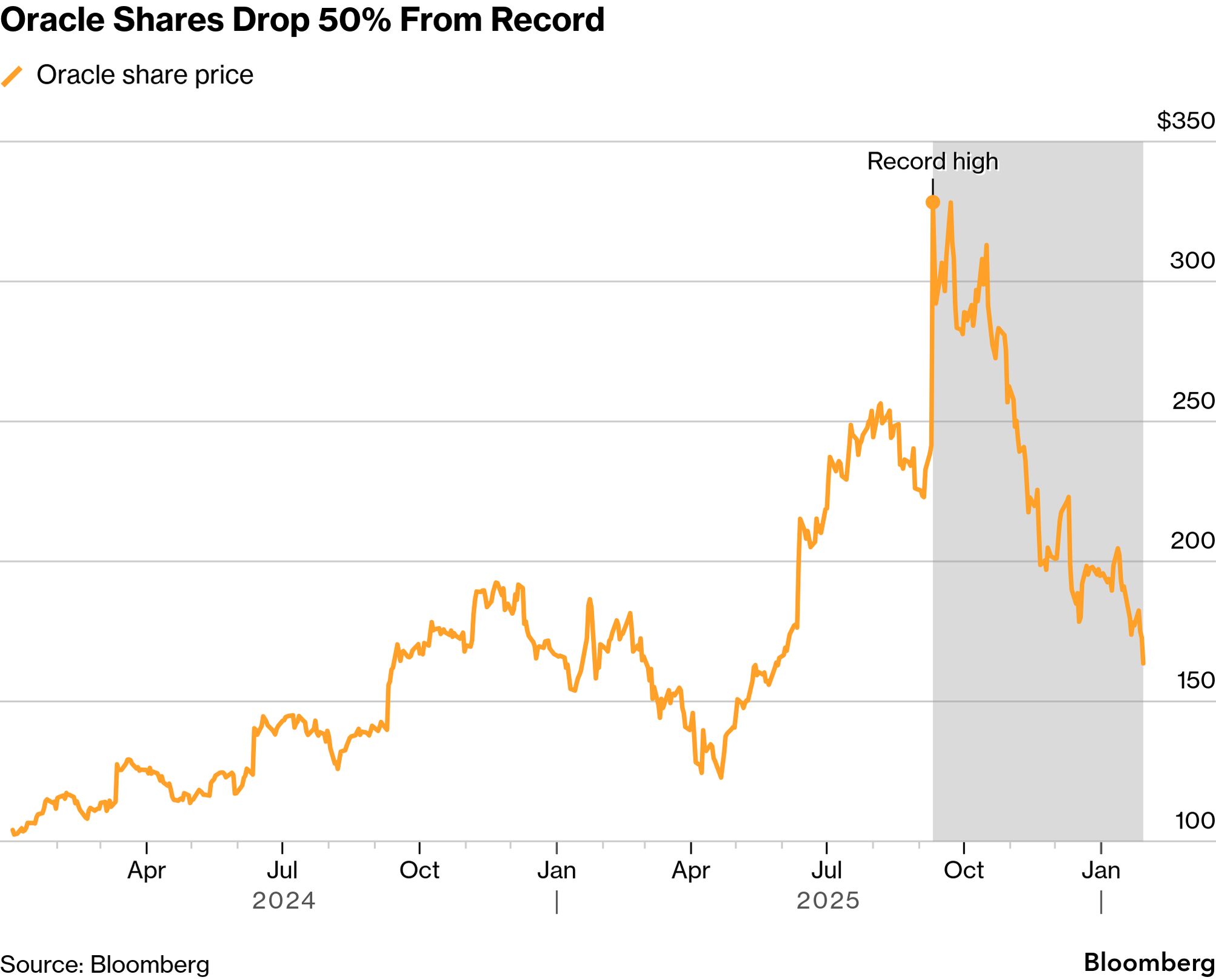 Oracle's Value Is Cut In Half From 2025 Peak as AI Caution Rises.



Comments
Post a Comment