 Himalayas to Arabian Sea: India's Night Glow from Space.
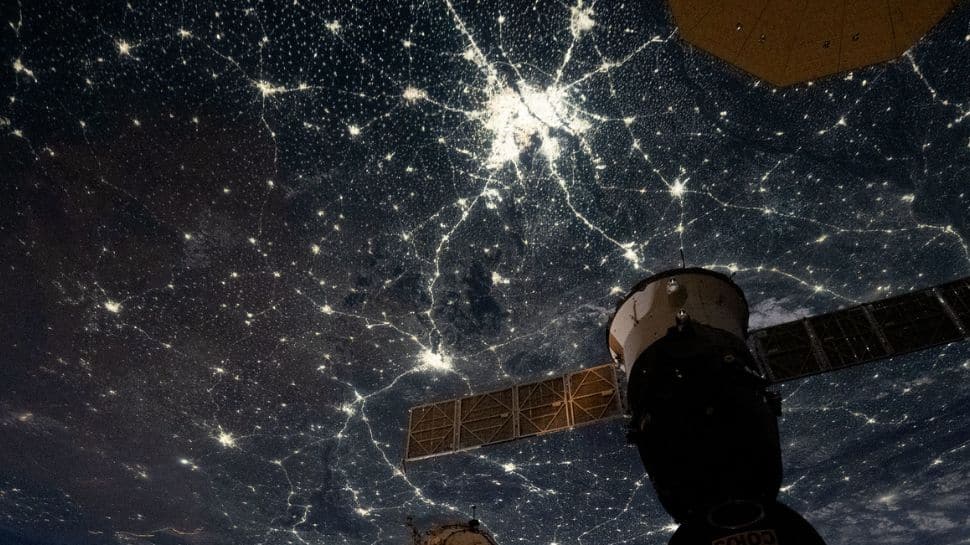
The International Space Station (ISS) has once again captivated the world by sharing a breathtaking nighttime photograph of India, captured from orbit as the station soared over the Arabian Sea and across the Himalayas.
Posted on March 11, 2026, via the official ISS account on X (formerly Twitter), the image reveals the Indian subcontinent aglow with thousands of city lights, forming intricate web-like patterns against the inky blackness of space. The caption read: “The well-lit nighttime cityscape of India pictured from the International Space Station as it soared over the Arabian Sea and across the Himalayas.”This stunning visual, credited to the ISS crew, highlights India's vibrant urban energy and geographical diversity from roughly 400 kilometers above Earth. The photo has gone viral across social media, news outlets, and platforms like Instagram and Facebook, with users describing it as “glowing like a diamond,” “mesmerizing,” and “a reminder of humanity's footprint on the planet.” It joins a long tradition of orbital imagery that showcases Earth at night, emphasizing how human activity lights up the darkness in profound ways.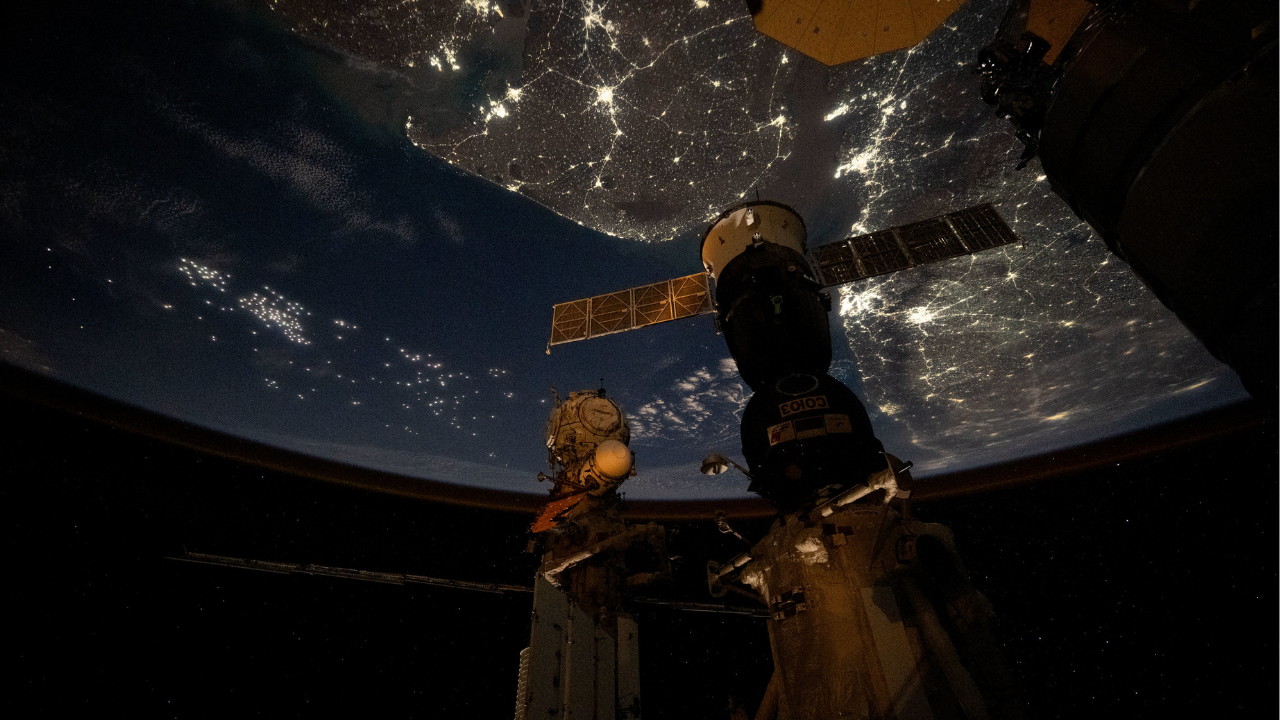 The Image in DetailTaken during a night pass over the region, the photograph captures India from the western coast along the Arabian Sea eastward toward the towering Himalayan range in the north.
The Arabian Sea appears as a vast, dark expanse on the left, contrasting sharply with the glowing coastal cities of Mumbai, Ahmedabad, Surat, and others along the western seaboard. Dense clusters of lights trace major urban centers: the bright sprawl of Delhi in the north, the glowing corridor of the Indo-Gangetic Plain (including Lucknow, Kanpur, Patna), and southern hubs like Bengaluru, Hyderabad, Chennai, and Kolkata.The Himalayas themselves appear as darker, less illuminated ridges—snow-capped peaks and high-altitude terrain receive minimal artificial lighting—creating a natural boundary that frames the northern edge of the illuminated landscape. The “river of light” mentioned in some commentaries follows the fertile Indo-Gangetic Plain, where flat land, abundant water, and dense population have shaped human settlement for millennia. Highways and smaller towns appear as thin threads of light connecting major cities, illustrating India's rapid urbanization and electrification.From orbit, the view is curved due to Earth's horizon, with the ISS's solar panels and modules partially visible in the foreground, adding a sense of scale and human presence in space. The dark sky backdrop, dotted with faint stars, underscores the isolation of the station as it orbits at speeds of about 28,000 km/h.
Context of the ISS and Earth ObservationThe International Space Station, a collaborative project involving NASA, Roscosmos, ESA, JAXA, and CSA, has been continuously inhabited since 2000. Orbiting at an average altitude of 400 km, it completes 16 orbits per day, passing over different regions multiple times. Astronauts and cosmonauts routinely capture photos using high-resolution cameras through cupola windows or during spacewalks, contributing to NASA's Earth observation programs. Nighttime Earth photos are particularly striking because they reveal patterns invisible during the day: population density, economic activity, infrastructure development, and even natural phenomena like wildfires or auroras. For India, these images consistently show one of the brightest regions on the planet at night, reflecting its status as the world's most populous nation (over 1.4 billion people) and ongoing rapid development.
Historical and Comparative Views
India has been a frequent subject of ISS imagery. Earlier in 2025, NASA released another nighttime photo showing the subcontinent under a star-filled sky, part of a social media series highlighting global cityscapes. Indian-origin astronauts have added personal touches: Sunita Williams, with over 300 days across multiple missions, has described the thrill of spotting familiar landmarks like the lights of Mumbai or Delhi from orbit during night passes.
In 2025, Group Captain Shubhanshu Shukla (part of India's Gaganyaan program) shared a timelapse video from the ISS depicting the illuminated subcontinent, offering a dynamic perspective of India's glow sweeping beneath the station. These views contrast with daytime ISS photos of India, which often show the green expanse of the Gangetic plains, the brown Thar Desert, the blue Arabian Sea, and snow-white Himalayas. Night views, however, emphasize human impact: the shift from rural darkness to urban brightness illustrates India's economic growth, rural electrification drives (e.g., Saubhagya scheme achieving near-universal household access), and migration to cities.Globally, similar nighttime composites from NASA’s Suomi NPP satellite or ISS show megaregions like the US East Coast, Europe’s “blue banana,” or East Asia’s Pearl River Delta. India's pattern stands out for its organic, sprawling distribution rather than concentrated coastal strips.
Scientific and Cultural SignificanceBeyond aesthetics, these images serve science: they help track light pollution, energy consumption, urban heat islands, and disaster impacts (e.g., power outages after cyclones appear as dark patches). The Himalayan darkness highlights ecological sensitivity—high altitudes and protected areas remain unlit, preserving biodiversity and cultural heritage. Culturally, the photo evokes pride for many Indians, symbolizing progress from space. Social media reactions include awe at the scale (“India looks like a galaxy!”), patriotism (“Bharat Mata ki jai from orbit!”), and reflections on inequality (brighter cities vs. darker rural areas). It also sparks discussions on sustainability: as India urbanizes, balancing growth with reduced light pollution and energy efficiency becomes key.
Technical Aspects of Capturing Such ImagesISS cameras include Nikon DSLRs modified for space (e.g., D5 or D6 models) with fast lenses for low-light conditions. Exposure settings balance city glow without overexposing, while the station's motion requires quick shutters. Astronauts train in composition, framing Earth against the horizon or modules for context. The photo's viral spread—amplified by shares from DD News, Air News Alert, and others—demonstrates how space imagery bridges science, wonder, and national identity.


Comments
Post a Comment