
CBSE Class 12 Maths QR Code Rickroll: The Viral Prank That Shocked Millions
CBSE QR Code Rickroll in Class 12 Maths Paper: How a Viral Prank Sparked Panic, Laughter, and Serious Questions About Exam Security.
After social media posts claimed that a QR code reportedly printed on the Class 12 Mathematics question paper directed students to a YouTube video, millions of students, parents, and educators across India were left stunned.
The Central Board of Secondary Education (CBSE) swiftly issued a clarification confirming that the question papers were genuine and that the security of the examination remained uncompromised. Yet the incident, which unfolded during the Class 12 Mathematics exam on March 9, 2026, quickly went viral, turning what could have been a routine high-stakes test into one of the most talked-about "rickroll" moments in recent Indian education history.
This wasn't just any glitch. In a few sets of the question paper (specifically noted in Series RPSQ4 and similar codes), scanning one of the printed QR codes redirected users straight to the official music video of British singer Rick Astley's 1987 hit "Never Gonna Give You Up." For those unfamiliar, this is the internet's most famous prank — known globally as "rickrolling."
Students expecting perhaps an answer key, a verification link, or even a leak (as panic spread) instead got the upbeat, 1980s synth-pop anthem that has trolled people online for nearly two decades. Videos and screenshots flooded platforms like Instagram, Reddit, and X (formerly Twitter), with captions ranging from "CBSE just rickrolled 2.5 million students 😂" to anxious questions about paper authenticity.
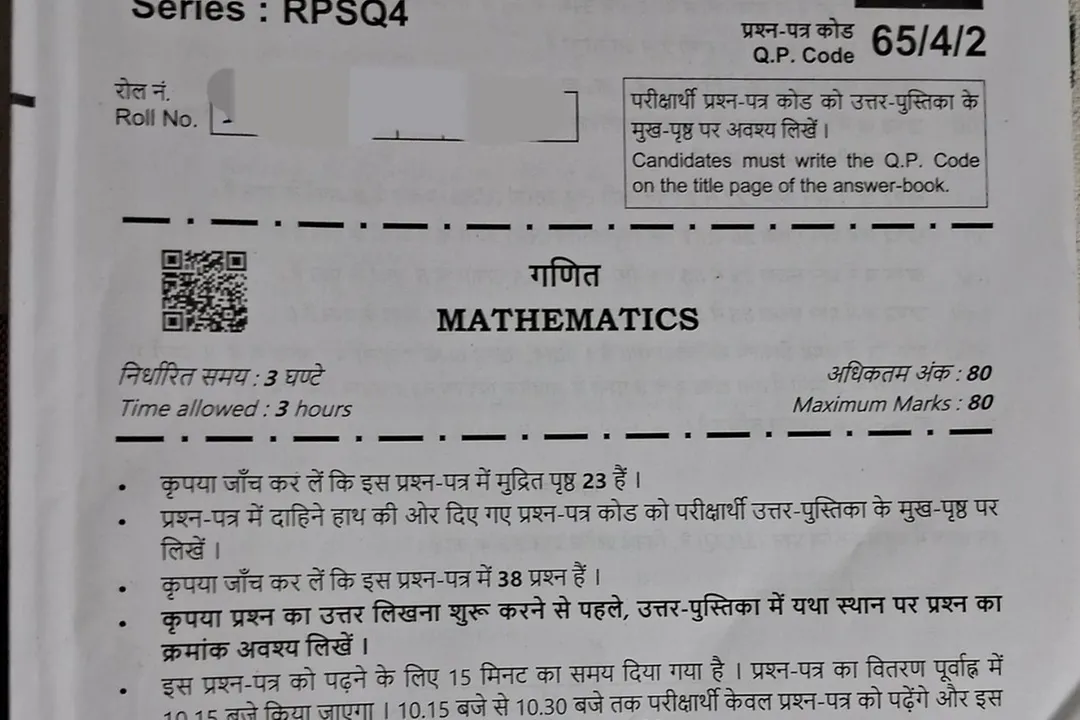
The images above show the actual QR code as it appeared on the Class 12 Maths question paper — right alongside the exam instructions in Hindi and English. Students scanning it during or after the three-hour exam were in for a surprise that mixed relief with disbelief.
The Incident Unfolds: From Exam Hall to Viral Storm
The Class 12 Mathematics exam took place on March 9, 2026, as part of the ongoing CBSE Board Exams 2026, which involve over 2.5 million students appearing for Class 12 papers alone. Shortly after the exam ended, posts began circulating showing students scanning the QR code with their phones. One popular video demonstrated the scan leading directly to the Rick Astley video on YouTube.
Within hours, the story exploded online. Hashtags like #CBSErickroll and #MathsPaperQR trended, with memes comparing it to classic internet pranks. Some students joked that CBSE had "officially trolled" them after months of preparation stress, while others expressed genuine concern that the paper might be fake or compromised.
On X, reactions poured in rapidly. One viral post noted: "CBSE Maths QR code takes you to Rick Astley’s classic on YouTube. Dharmendra Pradhan’s ministry couldn’t catch this basic blunder? What a joke on millions of students." Another humorous take read: "Bachche soch rahe the QR code se answer key milegi. Scan kiya to Rick Astley gaana gaa raha hai." These posts captured the mix of frustration, amusement, and lingering doubt among the student community.
Parents, already anxious about board exam outcomes that determine college admissions and careers, flooded helplines and social media with queries. The high-pressure environment of CBSE exams — where a single mark can shift percentiles dramatically — amplified the confusion. For many, the initial reaction was fear of another paper leak scandal, especially given India's history of such incidents.
CBSE's Official Clarification: Papers Genuine, Security Intact
On March 10, 2026, CBSE Controller of Examinations Sanyam Bhardwaj addressed the matter directly via an official statement posted on X. The board acknowledged the issue: "On 09.03.2026, examination of Mathematics was conducted for class 12. In a few question paper sets, it appears that when one of the given QR codes is scanned, it links to a YouTube video." Crucially, it reassured everyone: "It is hereby confirmed by the Board that the question papers are genuine. The security of the question papers remains uncompromised."
The statement emphasized that QR codes are part of multiple security features on question papers. "Many security features are provided on the Question Papers. These include QR codes to verify the genuineness of the question paper in case of suspected security breach." CBSE viewed the matter "seriously" and confirmed that "necessary steps are being taken by the Board to ensure that such issues are not repeated in future." Sources within the board later explained that the QR codes serve as internal verification tools — essentially digital fingerprints for tracing papers back to specific printing centers or batches if a leak is suspected. In this case, one batch apparently had an erroneous link embedded, leading to the unexpected music video instead of a neutral or blank verification page.
This swift response helped calm nerves, but the episode highlighted how quickly misinformation can spread in the digital age, especially during high-stakes national exams.

Rick Astley - Never Gonna Give You Up
Above is the iconic thumbnail from Rick Astley's "Never Gonna Give You Up" video — the exact page students landed on after scanning the QR code.
Why QR Codes on CBSE Question Papers? A Look Back to 2019
The board introduced QR codes on question papers in 2019 specifically to combat the rising threat of leaks. The purpose was twofold: to help trace the origin of any leaked paper and to stop its rapid spread across social media or WhatsApp groups. Each QR code acts like a unique identifier tied to the printing batch, center, or set. If authorities suspect tampering, they can scan it to verify authenticity instantly — far more efficient than manual checks on watermarks or holograms alone.
By 2025, CBSE had expanded this system, mandating unique QR codes even on answer sheets for better tracking. This digital layer complements traditional security measures like sealed packets, randomized sets (different question orders), and now mandatory CCTV surveillance at all exam centers. The 2019 rollout came after years of leaks that had eroded public trust. QR codes were a low-cost, high-impact innovation — scannable by any smartphone yet secure when properly implemented.
In technical terms, a QR code (Quick Response code) is a two-dimensional barcode capable of storing up to 7,089 numeric characters or 4,296 alphanumeric ones. In CBSE's case, it typically encodes a simple URL or reference string for internal verification. Scanning directs to a controlled server or page that confirms genuineness without revealing sensitive data. The 2026 incident appears to have been an isolated printing or template error where a test link (or joke insertion) replaced the standard one in a limited batch.

These visuals illustrate how QR codes are integrated into exam papers and the broader security framework CBSE promotes.
The Rickroll Explained: An Internet Prank Meets Board Exams
For younger students who might not have grown up with early-2000s internet culture, rickrolling originated in 2007–2008 on forums like 4chan. Users would post links promising something useful (game cheats, videos, or news) only for them to redirect to Rick Astley's song. The prank's enduring appeal lies in its harmless surprise and the song's catchy, wholesome vibe. Over the years, it has rickrolled everything from video games to political speeches and even company websites.
In the context of a serious board exam, the prank took on new meaning. Students under immense pressure — many preparing for months or years — suddenly faced this light-hearted troll. Some found it hilarious and stress-relieving; others saw it as a symbol of systemic carelessness. Either way, it humanized the otherwise rigid exam process and sparked conversations about balancing security with unexpected human elements (or errors).
How Could This Happen? Inside CBSE's Printing and Security Process
Question papers are printed at highly secure facilities with strict access controls, multi-layer encryption for digital files, and randomized distribution. Multiple sets (often 4–8 variants) are created to prevent mass cheating. However, the final printing stage involves human oversight and automated systems. Sources suggest that in this limited batch, the QR code template was either manually altered as a prank by someone internally or a test URL was accidentally left in the production file. CBSE insiders noted that QR codes can sometimes be "random codes or anything else that is known internally to verify" the paper — and in this case, it pointed to the video instead.
No evidence of external hacking or leak emerged. The board's quick confirmation that security remained intact points to an internal quality-control lapse rather than a breach. Steps are now underway to audit the printing workflow and ensure future QR codes link only to verified internal resources.
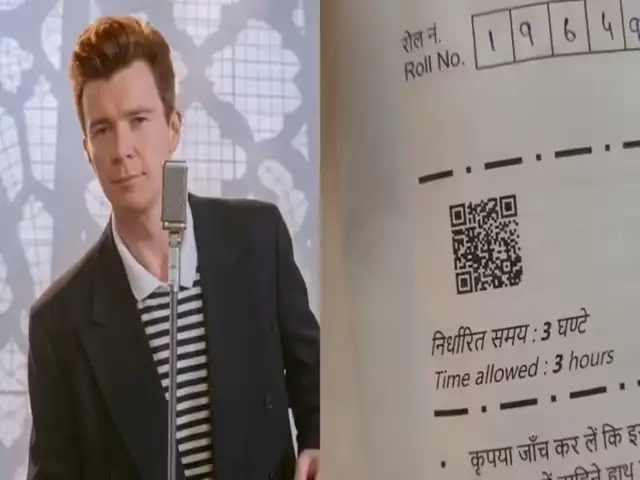
Never Gonna Give You Up': CBSE Class 12 Maths paper QR code leads to Rick Astley song, 'rickrolls' students. Board responds.
The composite image above captures both the singer and the exam paper QR code side-by-side, perfectly summing up the viral moment.
Historical Context: CBSE's Long Battle Against Paper Leaks
This incident cannot be viewed in isolation. India has grappled with exam paper leaks for decades, damaging credibility and forcing re-exams that disrupt lakhs of students' lives. The most infamous CBSE case was in 2018: the Class 10 Mathematics and Class 12 Economics papers were leaked hours before the exams via WhatsApp groups. A gang allegedly colluded with bank and coaching staff to circulate handwritten copies. Delhi Police questioned dozens, including students and tutors. CBSE was forced to cancel and re-conduct the exams, affecting over 2.8 million students. Protests erupted at Jantar Mantar in Delhi, with students demanding stricter action.
Earlier incidents include the 2015 AIPMT (now NEET) leak across 10 states, which led to the Supreme Court ordering a re-exam. Other state boards and competitive exams like SSC have faced similar scandals. These leaks often involve insider collusion, digital circulation, and weak chain-of-custody during printing and transport.
The 2018 crisis was a turning point. It accelerated digital reforms: encrypted question paper transmission, biometric attendance at centers, and the 2019 introduction of QR codes. By 2025–26, additional layers included mandatory CCTV with live monitoring, unique QR codes on answer sheets, and APAAR ID integration for student verification. These measures have significantly reduced leaks, but the 2026 rickroll shows that even advanced systems are vulnerable to human error or oversight.
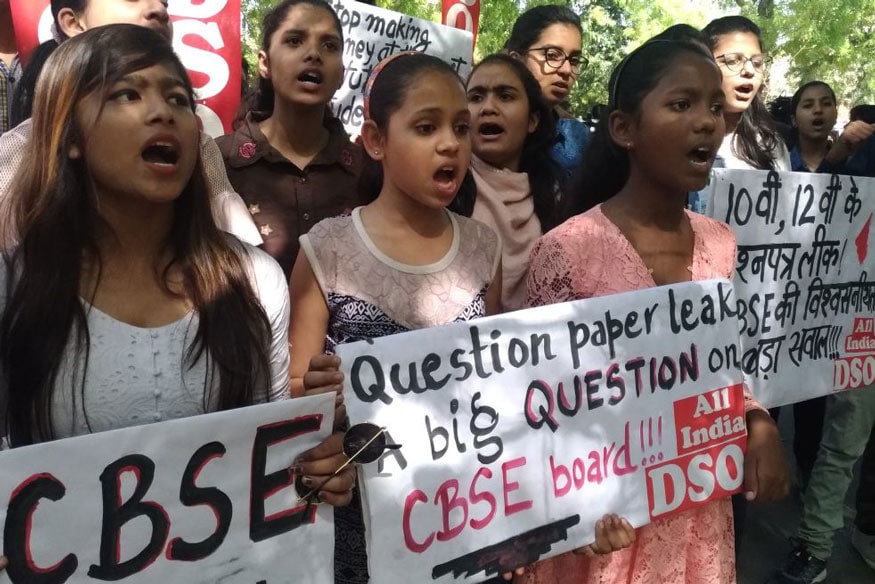
These powerful images from the 2018 protests remind us why CBSE takes even minor incidents seriously today.
Current Security Ecosystem in CBSE Board Exams 2025–26
Today's CBSE exams feature a multi-layered defense:
Pre-exam: Digital encryption of papers, secure printing with QR batch identifiers, randomized sets.
During exam: Frisking, metal detectors, banned items (phones, smartwatches), CCTV in halls and corridors, live streaming at select centers.
Post-exam: QR on answer sheets for tracking, biometric-linked evaluation where possible.
QR-specific role: Instant verification tool for suspected breaches.
Over 78,000 centers and millions of students are covered. The policy aims for zero tolerance, with strict penalties for unfair means (up to two-year debarment). The rickroll episode, while embarrassing, actually reinforced the system's strength — no answers were leaked, no mass cheating occurred, and authenticity was proven within hours.
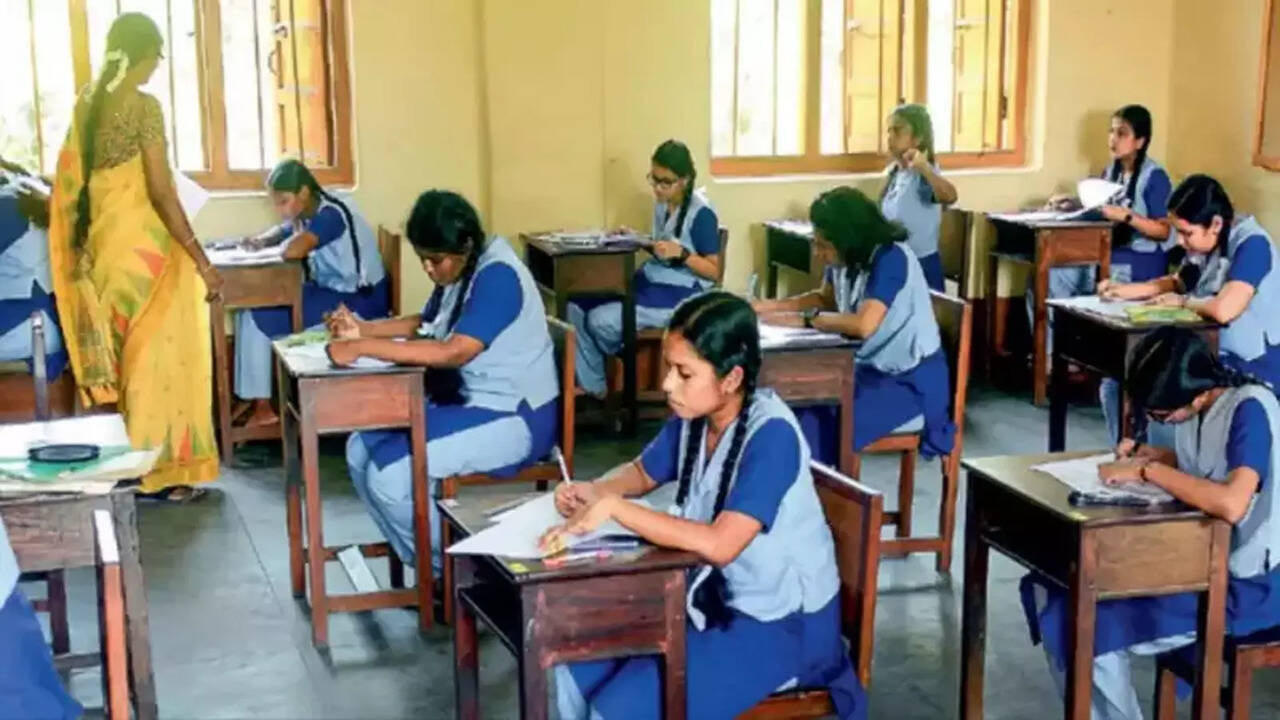
These scenes capture the intense yet orderly atmosphere of CBSE exam halls — the exact environment where the QR surprise unfolded.
Public Reactions, Student Impact, and the Human Side
Beyond memes, the incident affected real people. For Class 12 students, board results influence JEE, NEET, CUET, and university admissions. The brief panic added unnecessary stress during an already anxiety-filled period. Mental health experts noted that while the prank ultimately proved harmless, initial fears of a "fake paper" could exacerbate exam-related anxiety for some.
On the positive side, many students appreciated the light moment. It became a bonding experience — shared laughs on group chats and a story they'll tell for years. Teachers and principals reported that the clarification restored calm quickly. Broader discussions emerged on social media about modernizing security without losing the human touch, and the need for better quality checks in high-volume printing.
Implications and the Road Ahead for CBSE
CBSE has promised corrective action, likely including stricter template audits, automated QR validation before mass printing, and perhaps third-party oversight. This minor lapse serves as a valuable reminder: technology enhances security but requires vigilant human implementation. In a country where board exams shape millions of futures annually, even small errors can erode trust.
Looking forward, CBSE's evolving ecosystem — blending QR codes, AI-driven monitoring, and digital tracking — positions it as a leader in exam integrity. The 2026 incident, far from undermining confidence, ultimately demonstrated the board's transparency and responsiveness. No re-exam was needed, no careers disrupted, and the papers were proven genuine.
In the end, this "Never Gonna Give You Up" moment turned a potential crisis into an unforgettable cultural footnote. Students who scanned that QR code didn't just face a maths paper — they encountered the internet's favorite prank in the most unexpected place. As one X user quipped, "CBSE legend status unlocked." For the board, it's a lesson learned; for students, a story of resilience and humor amid the pressure of boards.
The CBSE Class 12 Maths QR code controversy of March 2026 will be remembered not as a security failure but as a quirky reminder that even the most serious systems can occasionally deliver a surprise chorus. With enhanced protocols in place, future exams should proceed with even greater assurance. Students can now focus on what truly matters: their preparation, performance, and bright futures ahead.


Comments
Post a Comment