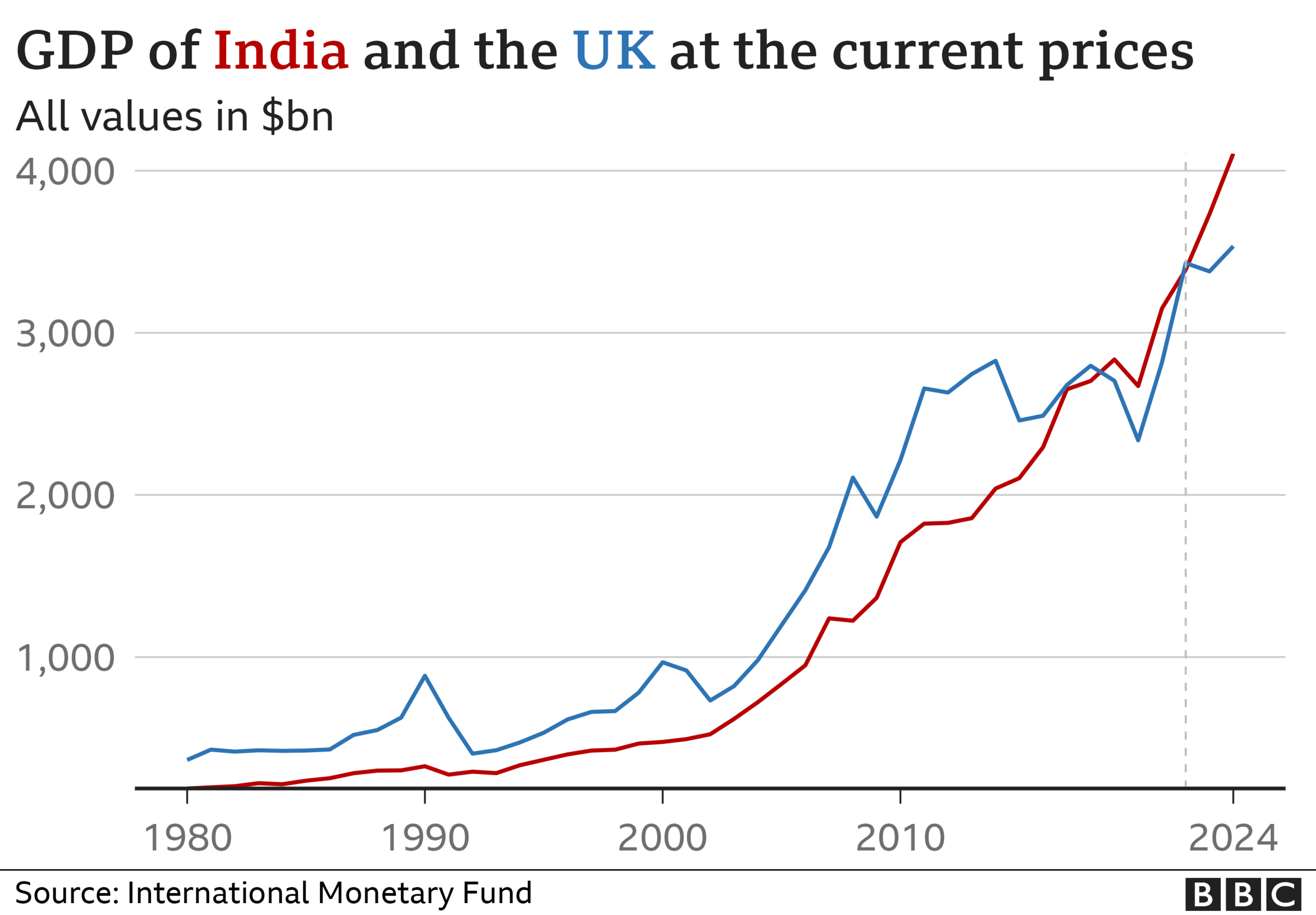
India Slips to 6th Largest Economy: IMF Data Shows UK Overtakes in 2025 & 2026 (FY26 & FY27).
According to the International Monetary Fund’s latest World Economic Outlook released in April 2026, India has slipped to the sixth position in global nominal GDP rankings for both 2025 (FY26) and 2026 (FY27). The country, which held the fifth spot for three consecutive years, has been overtaken by the United Kingdom due to exchange rate movements and base-year revisions.
This development has sparked widespread discussion, but experts emphasize that it is a temporary nominal shift and does not reflect any slowdown in India’s underlying economic momentum. India remains the fastest-growing major economy in the world.
This development has sparked widespread discussion, but experts emphasize that it is a temporary nominal shift and does not reflect any slowdown in India’s underlying economic momentum. India remains the fastest-growing major economy in the world.
Latest IMF Nominal GDP Rankings (in USD Trillion)
RankCountry2025 Projection2026 Projection1 United States 28.0+ 29.5+
2 China 19.5+ 20.8+
3 Germany 4.8+ 5.4+
4 Japan 4.19 4.38
5 United Kingdom 4.00 4.26
6 India 3.92 4.15
Source: IMF World Economic Outlook, April 2026
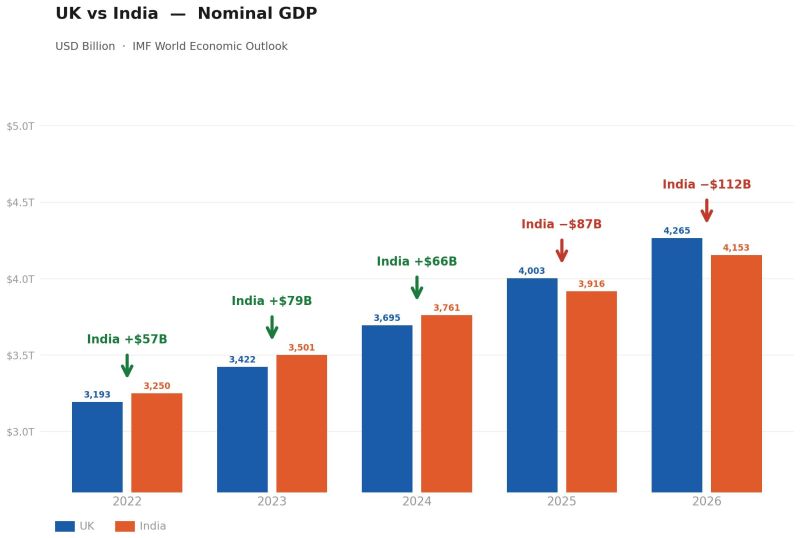
India’s economy is projected at approximately $3.92 trillion in 2025 and $4.15 trillion in 2026, narrowly behind the UK’s $4.00 trillion and $4.26 trillion respectively.

Why India Dropped from 5th to 6th
The slip is primarily due to currency valuation effects rather than weak economic performance:
Rupee vs Pound: A relatively weaker Indian rupee against the US dollar reduced the dollar-converted size of the economy.
India’s economy is projected at approximately $3.92 trillion in 2025 and $4.15 trillion in 2026, narrowly behind the UK’s $4.00 trillion and $4.26 trillion respectively.
Why India Dropped from 5th to 6th
The slip is primarily due to currency valuation effects rather than weak economic performance:
Rupee vs Pound: A relatively weaker Indian rupee against the US dollar reduced the dollar-converted size of the economy.
New Base Year (2022-23): The government’s shift to a updated base year for national accounts led to recalibrated GDP estimates, lowering nominal figures in USD terms.
UK’s Resilience: Stronger performance of the British pound and steady services sector growth helped the UK edge ahead.
Short-term Volatility: Nominal rankings are highly sensitive to exchange rates. Such fluctuations have occurred before (e.g., India overtook the UK in 2022-23).

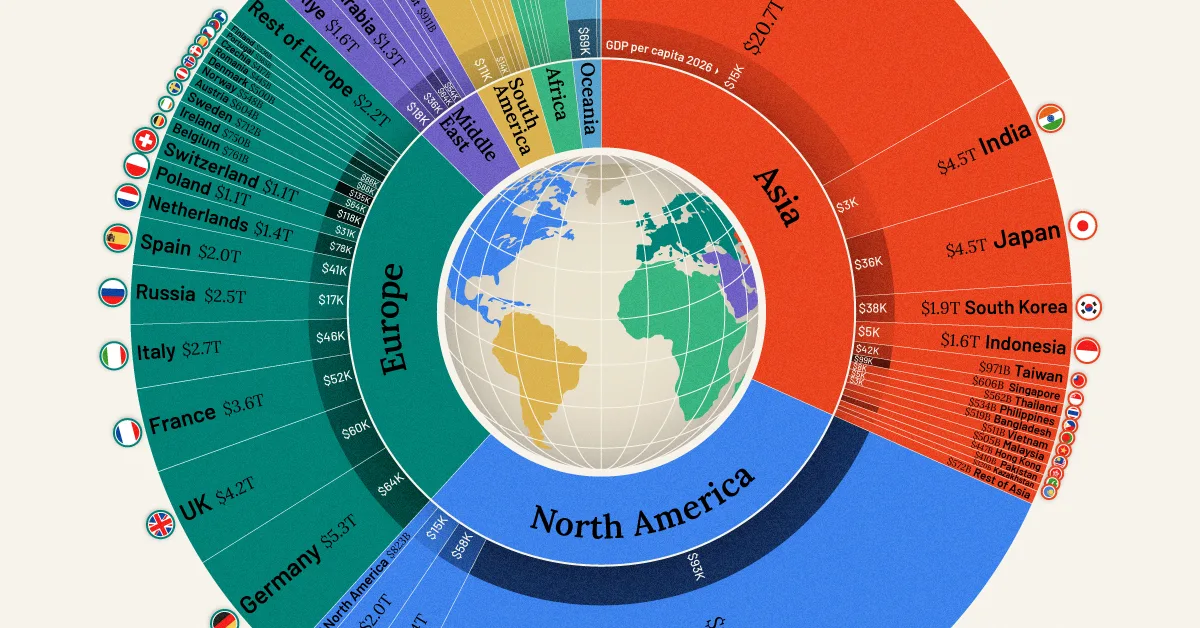
Global Power Shift: The World's Largest Economies Ranked for 2026.
India’s Real Growth Story Remains Unmatched
Despite the nominal ranking dip, India’s fundamentals are robust:
Real GDP Growth: IMF projects 6.5% for FY27 — the highest among major economies.
Despite the nominal ranking dip, India’s fundamentals are robust:
Real GDP Growth: IMF projects 6.5% for FY27 — the highest among major economies.
Contribution to Global Growth: India is expected to contribute nearly 19% of global growth in the coming years.
PPP Rankings: India continues to rank as the third-largest economy in Purchasing Power Parity terms.

 India vs UK: A Detailed Comparison
 Growth Trajectory India: Consistent 6–7% real growth. UK: Around 1% real growth.
Demographics India: Massive young population and demographic dividend. UK: Aging population and labour shortages.
Economic Structure India is rapidly diversifying into manufacturing (PLI schemes), digital economy, renewables, and services. The UK relies heavily on finance, professional services, and creative industries.
Per Capita Income UK remains far ahead (~$61,000 vs India’s ~$2,813 in 2026), highlighting India’s focus on scale and inclusive growth.

World Economic Outlook, April 2026: Global Economy in the Shadow of War.
Long-Term Outlook: India to Regain Momentum
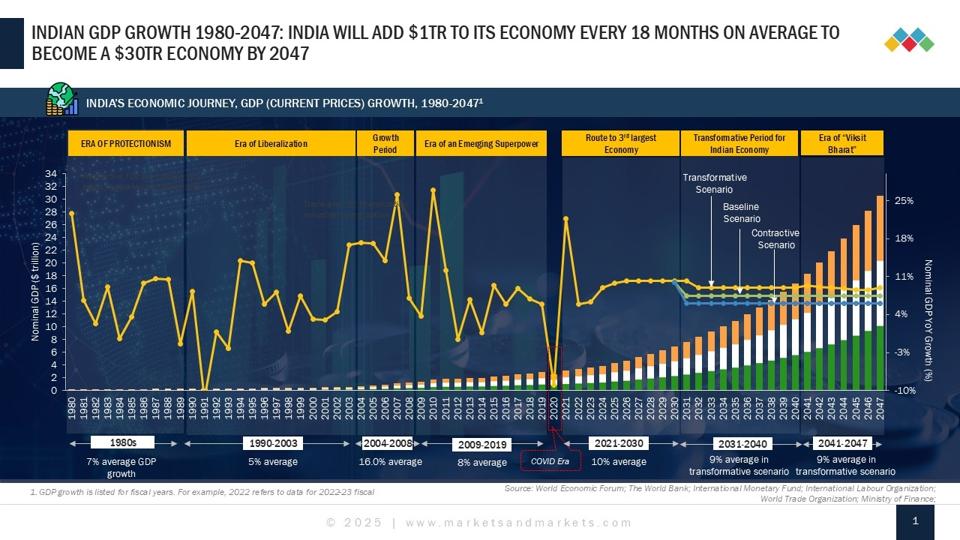
IMF and other forecasters expect India to reclaim the 5th position by FY28 and challenge for 4th place shortly after. By 2030, India is widely projected to become the third-largest economy in nominal terms.
Key Drivers for India’s Ascent:
Infrastructure boom and record capital expenditure.
Digital public infrastructure (UPI, Aadhaar, ONDC).
Manufacturing push under “Make in India” and PLI schemes.
Rising domestic consumption from a growing middle class.
Energy transition and green economy leadership.
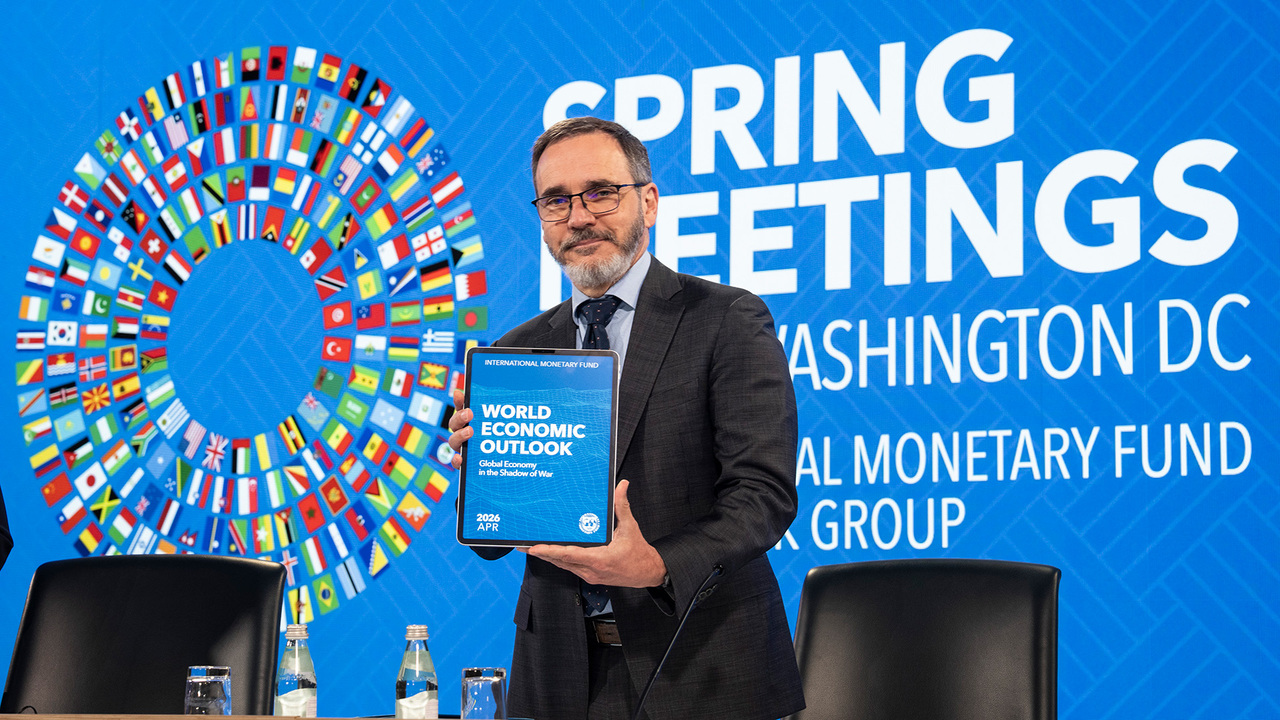
Press Briefing Transcript: World Economic Outlook, Spring Meetings 2026.
IMF and other forecasters expect India to reclaim the 5th position by FY28 and challenge for 4th place shortly after. By 2030, India is widely projected to become the third-largest economy in nominal terms.
Key Drivers for India’s Ascent:
Infrastructure boom and record capital expenditure.
Digital public infrastructure (UPI, Aadhaar, ONDC).
Manufacturing push under “Make in India” and PLI schemes.
Rising domestic consumption from a growing middle class.
Energy transition and green economy leadership.
Press Briefing Transcript: World Economic Outlook, Spring Meetings 2026.
Challenges and Policy Focus
To sustain this trajectory, India must address:
Currency volatility and inflation management.
Boosting exports and reducing trade deficits.
Skilling the workforce for future jobs.
Improving ease of doing business and attracting more FDI.
Climate resilience and sustainable urbanisation.
To sustain this trajectory, India must address:
Currency volatility and inflation management.
Boosting exports and reducing trade deficits.
Skilling the workforce for future jobs.
Improving ease of doing business and attracting more FDI.
Climate resilience and sustainable urbanisation.
Expert Opinions
Economists view this ranking change as statistical rather than structural. Former RBI Governor Raghuram Rajan and others have noted that exchange rate movements often cause short-term ranking shifts, but real growth and structural reforms determine long-term success.
The IMF itself has repeatedly praised India’s resilience, upward revisions in growth forecasts, and strong domestic demand.
Sectoral Highlights Driving India Forward
Technology & Services: Global leadership in IT, software, and digital payments.
Manufacturing: Electronics, automobiles, pharmaceuticals, and defence.
Renewables: One of the fastest-growing clean energy markets.
Agriculture & Rural Economy: Record production and improving productivity.
Startups & Unicorns: Vibrant ecosystem supporting innovation.
What This Means for Citizens and Investors
For ordinary Indians, the ranking news has limited direct impact. Focus remains on job creation, rising incomes, and improving quality of life.
For global investors, India continues to be one of the most attractive destinations due to its scale, demographics, and reform momentum.
This temporary slip to sixth place should be seen in perspective — India’s journey from a $2 trillion economy (a few years ago) to a $4+ trillion economy in 2026 is remarkable.
Conclusion India’s drop to sixth in nominal GDP rankings for 2025 and 2026 is a short-term statistical adjustment caused by currency and base-year effects.
The country’s real economic momentum, growth rate, and long-term potential remain exceptionally strong. With continued policy focus and structural reforms, India is firmly on track to become one of the top three global economies in the coming decade.
The story of India’s rise is far from over — it is only accelerating.
The story of India’s rise is far from over — it is only accelerating.
#IndiaEconomy #IMF2026 #GDP Rankings #EconomicGrowth #ViksitBharat
Comments
Post a Comment