Bengaluru Second Airport: Location to be Finalised in 5 Months – Feasibility Study Starts for 3 Sites.

Bengaluru Second Airport: Location to be Finalised in 5 Months – Feasibility Study Starts for 3 Sites.
Bengaluru Second Airport Location Finalisation in 5 Months: Feasibility Study Begins for 3 Shortlisted Sites. Bengaluru, India’s Silicon Valley and one of the fastest-growing major cities in the world, is on the verge of a transformative infrastructure milestone. The Karnataka government has officially launched the next critical phase for the city’s long-awaited second international airport, with a detailed feasibility study underway for three shortlisted sites.
Industries and Infrastructure Minister M.B. Patil has confirmed that the final location will be decided within the next five months.
This ambitious greenfield project aims to ease severe pressure on Kempegowda International Airport (KIA) at Devanahalli, which is rapidly approaching its saturation point. Officials target operational readiness by 2033, positioning Bengaluru for sustained economic growth well into the future.

Why Bengaluru Urgently Needs a Second Airport.
This ambitious greenfield project aims to ease severe pressure on Kempegowda International Airport (KIA) at Devanahalli, which is rapidly approaching its saturation point. Officials target operational readiness by 2033, positioning Bengaluru for sustained economic growth well into the future.
Why Bengaluru Urgently Needs a Second Airport.
Bengaluru’s aviation demand has exploded over the past decade. As the hub for IT, biotechnology, aerospace, manufacturing, and startups, the city attracts millions of business and leisure travellers annually. Kempegowda International Airport, which opened in 2008, currently handles over 30-35 million passengers per year and ranks among India’s busiest airports.
Projections indicate that KIA will reach its peak capacity (around 80-92 million passengers annually after ongoing expansions) by 2030. Expansion alone — including new terminals and runways — cannot fully address long-term needs. Factors driving this urgency include:
Explosive passenger growth: Domestic and international traffic has grown at double-digit rates.
Cargo and logistics boom: Bengaluru’s industrial corridors require efficient air freight connectivity.
Geographical imbalance: KIA is located ~40 km north of the city centre. Residents in south Bengaluru (Electronic City, Bannerghatta, Kanakapura) and west Bengaluru (Mysore Road, Magadi Road) endure 2-3 hour commutes during peak hours.
Economic multiplier effect: A second airport will boost real estate, hospitality, employment, and ancillary industries in underserved regions.
Competition from neighbouring states: Tamil Nadu’s proposed Hosur airport poses a potential threat to divert traffic and investment from Karnataka.
A well-placed second airport will decongest roads, reduce travel time, improve regional connectivity, and reinforce Bengaluru’s status as a global aviation and business hub.
Three Shortlisted Sites: An Overview
After preliminary assessments by the Airports Authority of India (AAI) in 2025, the Karnataka State Industrial and Infrastructure Development Corporation (KSIIDC) has narrowed down options to three promising locations, each spanning approximately 4,500–5,500 acres.
Somanahalli (Kanakapura Road, South Bengaluru)
Choodahalli / Chudahalli (Kanakapura Road, adjacent to Somanahalli)
Chikkasoluru / Near Nelamangala-Kunigal Road (Western Bengaluru)
The two Kanakapura sites are adjoining and could potentially be combined for a larger integrated airport. The western site lies along the Nelamangala-Kunigal corridor, offering strong potential for western and north-western connectivity.
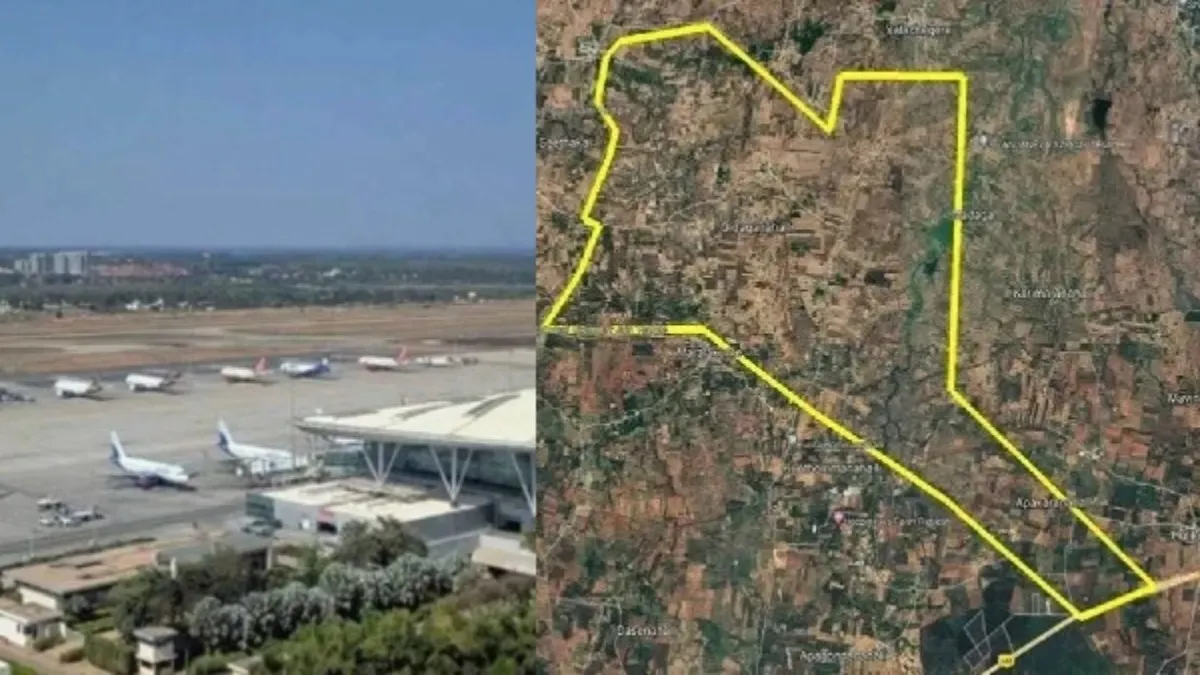

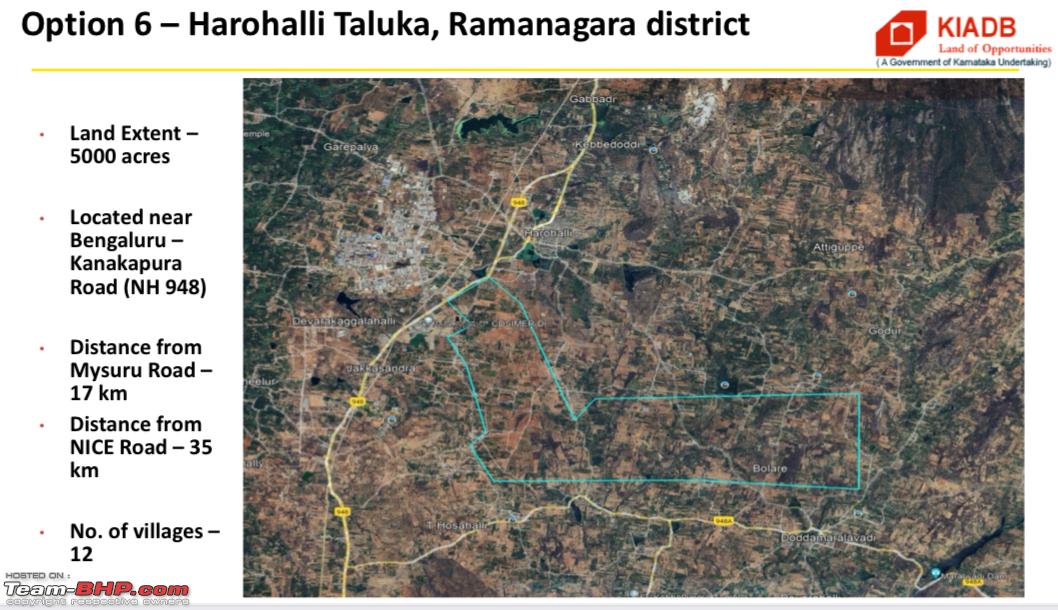
Key Site Details:
Distance from city centre: 30–40 km (much closer for south and west Bengaluru compared to KIA).
Land availability: Government-owned or easily acquirable parcels with minimal displacement in some cases.
Connectivity: Proximity to existing and proposed highways (Nice Road, STRR, Kanakapura Road upgrades), and future metro/rail extensions.
Challenges Identified by AAI
The AAI’s initial site visits in April 2025 flagged several technical concerns that the upcoming feasibility study must address:
Hilly and rocky terrain at Kanakapura sites.
Potential airspace conflicts near Bannerghatta and HAL.
Hydrological and environmental factors (lakes, wildlife corridors).
Noise impact on surrounding villages.
Meteorological conditions (monsoon winds, fog).
These issues explain why a comprehensive consultant-led study is essential before final selection.
Feasibility Study: Scope and Timeline
KSIIDC has floated tenders for a reputed consultant to prepare a Detailed Feasibility Report and Strategic Project Report. Bids closed in early 2026, and the selected firm will have approximately five months to submit findings.
Key aspects under evaluation:
Technical feasibility (runway orientation, obstacle clearance, soil testing).
Traffic demand forecasting for the next 35 years.
Environmental Impact Assessment (EIA) and wildlife clearances.
Economic and financial viability (cost estimates, revenue models, PPP structuring).
Connectivity infrastructure (roads, metro, rail links).
Social impact and rehabilitation plans.
Once the report is submitted, the government will select the best site (or combination) and proceed to Detailed Project Report (DPR), land acquisition, and central government approvals.
Economic and Real Estate Impact
A second airport will be a game-changer for real estate. Areas around the chosen site are likely to witness massive appreciation, similar to what Devanahalli experienced post-KIA. South Bengaluru (Kanakapura corridor) already has strong industrial and residential momentum, while the western corridor could unlock new growth in Nelamangala, Magadi, and Tumakuru directions.
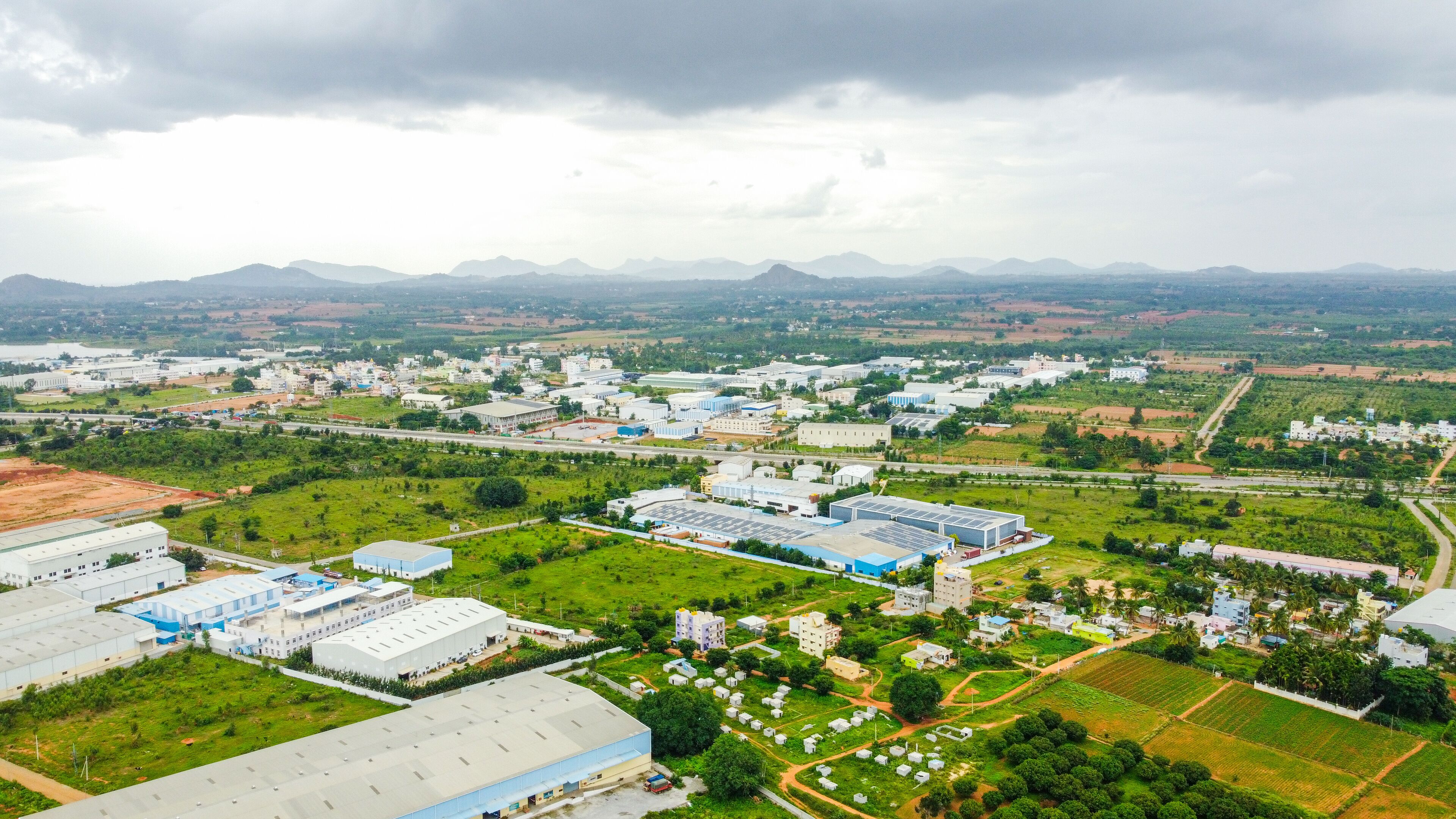
Visit Nelamangala: 2026 Travel Guide for Nelamangala, Bengaluru.
Expected benefits:
Direct and indirect employment for over 1 lakh people during construction and operations.
Direct and indirect employment for over 1 lakh people during construction and operations.
Boost to tourism, MICE (Meetings, Incentives, Conferences, Exhibitions), and logistics.
Reduced congestion on NH-44 and other arterial roads.
Enhanced cargo handling capacity for exports from industrial parks.
Political and Stakeholder Perspectives
Minister M.B. Patil has been vocal about fast-tracking the project, emphasising that preparatory work began well in advance. There is cross-party support, though local leaders from south Bengaluru strongly advocate for the Kanakapura sites due to better accessibility for IT corridors.
Environmental groups and farmer associations have raised concerns about land use and ecology, which the feasibility study will carefully evaluate.
Comparison with Other Proposals
The government has ruled out or deprioritised several earlier suggestions (Bidadi, Doddaballapur, etc.) based on AAI feedback. The current three sites emerged as the most viable after rigorous shortlisting.
Meanwhile, Tamil Nadu’s Hosur airport plan remains a point of competitive pressure, but Karnataka officials assert their project will serve the core Bengaluru Metropolitan Region more effectively.
Road Ahead: Timeline and Vision
Next 5 months: Consultant submits feasibility report.
2026-2027: Site finalisation, DPR, clearances.
2027-2030: Land acquisition, tendering, construction begins.
2033 target: Operations commence with initial capacity matching or exceeding current KIA.
The second airport is envisioned as a world-class facility — potentially as large as KIA — with state-of-the-art terminals, green technology, and seamless multi-modal connectivity.

AAI assesses two sites as Bengaluru eyes second airport.
Broader Implications for Karnataka
This project is not just about aviation. It represents Karnataka’s vision to future-proof its economic engine. By addressing infrastructure bottlenecks proactively, the state aims to retain its edge over competing cities like Hyderabad, Chennai, and Pune.
Bengaluru’s residents, especially those in the south and west, eagerly await relief from long airport commutes. Business leaders see it as essential for attracting more global investment.
As the feasibility study progresses, Bengaluru stands at an exciting crossroads. The coming months will determine not only the airport’s location but also the future growth trajectory of one of India’s most dynamic cities.
Conclusion The initiation of the feasibility study for Bengaluru’s second airport marks a decisive step forward after years of planning. With three strong contenders on the table and a clear five-month timeline for location finalisation, the dream of a more connected and efficient Bengaluru is closer than ever. The successful realisation of this project by 2033 could redefine the city’s skyline — and its economic destiny — for generations to come.
Comments
Post a Comment