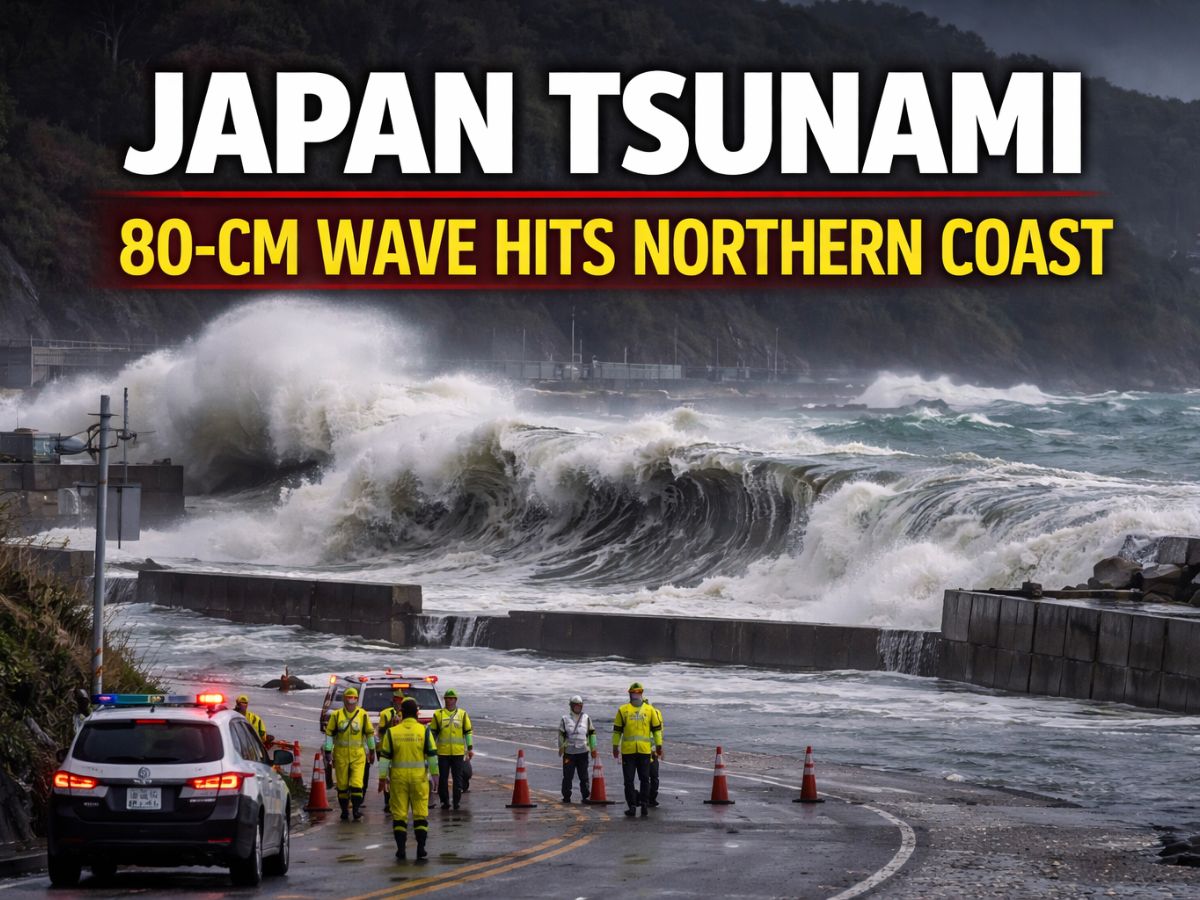
"7.7-Magnitude Earthquake Strikes Northern Japan"
7.7-Magnitude Earthquake Hits Japan: How Much Damage Can It Cause?
A powerful 7.7-magnitude earthquake struck northern Japan on Monday, April 20, 2026, at approximately 4:53 p.m. local time (07:53 GMT), in Pacific waters off the coast of Iwate Prefecture near the Sanriku region. Japan's Meteorological Agency (JMA) promptly issued tsunami warnings for coastal areas in Iwate, Aomori, and parts of Hokkaido, citing the potential for waves up to 3 meters (about 10 feet).
Roughly 40 minutes later, a tsunami wave measuring about 80 centimeters (31 inches) reached the port city of Kuji in Iwate, as confirmed by the JMA. Authorities escalated safety alerts due to the risk of additional waves, though the warning was later downgraded to a tsunami advisory and fully lifted by late evening.
No immediate reports of major casualties or widespread structural damage have emerged, but the event has triggered a rare special advisory from the JMA warning of an elevated risk of a mega-quake (magnitude 8.0 or stronger) in the coming days or weeks. Japan, one of the most seismically active nations on Earth, is no stranger to such events. This article explores the quake in detail, its immediate effects, the science of its destructive potential, and—critically—how much damage a 7.7-magnitude event can cause under varying conditions.
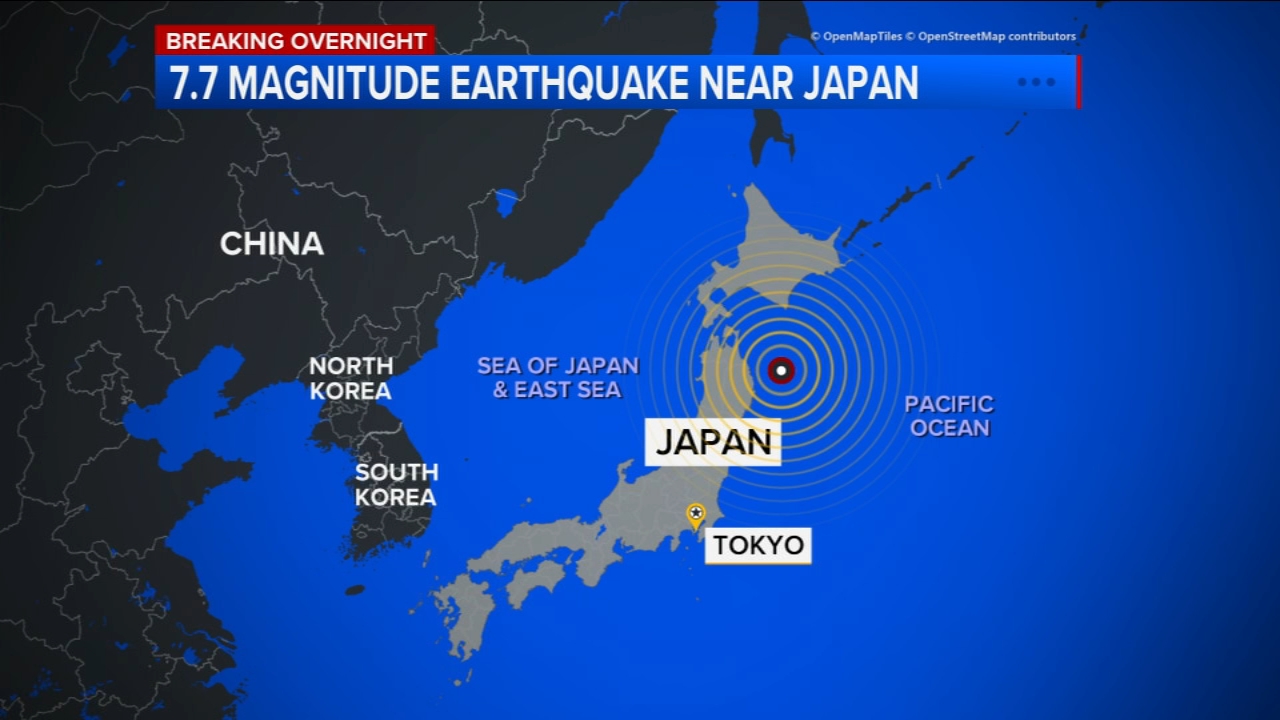
Japan warns of slightly increased risk of mega-quake after a 7.7-magnitude one.
Quick Read Summary A 7.7-magnitude offshore quake off Iwate caused minor tsunami waves (up to 80 cm observed) and prompted evacuations affecting ~170,000 people. Shaking was felt as far as Tokyo. Damage appears minimal so far due to Japan's advanced preparedness, but the JMA has flagged a 1% chance (10x normal) of a follow-up mega-quake. A 7.7 event releases roughly 32 times more energy than a 6.7 quake and can devastate if shallow and near population centers.
Japan warns of slightly increased risk of mega-quake after a 7.7-magnitude one.
Quick Read Summary A 7.7-magnitude offshore quake off Iwate caused minor tsunami waves (up to 80 cm observed) and prompted evacuations affecting ~170,000 people. Shaking was felt as far as Tokyo. Damage appears minimal so far due to Japan's advanced preparedness, but the JMA has flagged a 1% chance (10x normal) of a follow-up mega-quake. A 7.7 event releases roughly 32 times more energy than a 6.7 quake and can devastate if shallow and near population centers.
The Event Unfolds: Timeline and Initial Impacts
The epicenter was located approximately 62 miles (100 km) northeast of Miyako, at a depth of about 19-20 km—relatively shallow for a subduction-zone quake, which amplified shaking. Tremors were felt across northeastern Japan, with upper 5 intensity on the JMA's seismic scale in some areas. Even Tokyo, hundreds of kilometers south, reported noticeable swaying in high-rises.
Coastal residents heeded sirens and broadcasts urging immediate evacuation to higher ground. Images from the time show orderly movement, a testament to Japan's rigorous disaster drills. Within hours, the JMA downgraded threats as actual waves remained modest. By Tuesday morning, April 21, the all-clear was given, though aftershocks continue.

Strong earthquake hits off Japan's coast, tsunami advisory issued.
This was not a repeat of the catastrophic 2011 Tohoku disaster (M9.0), but it served as a stark reminder. Prime Minister Sanae Takaichi and officials stressed vigilance, with the Cabinet Office noting the temporary spike in mega-quake probability near the Chishima Trench.
Why Japan? The Ring of Fire and Tectonic Reality
Japan sits atop the Pacific Ring of Fire, where the Pacific Plate subducts under the Eurasian and Philippine Sea plates at rates of several centimeters per year. This convergence generates about 20% of the world's earthquakes of magnitude 6 or higher. The Sanriku coast has a long history of tsunamigenic quakes due to its position along the Japan Trench.
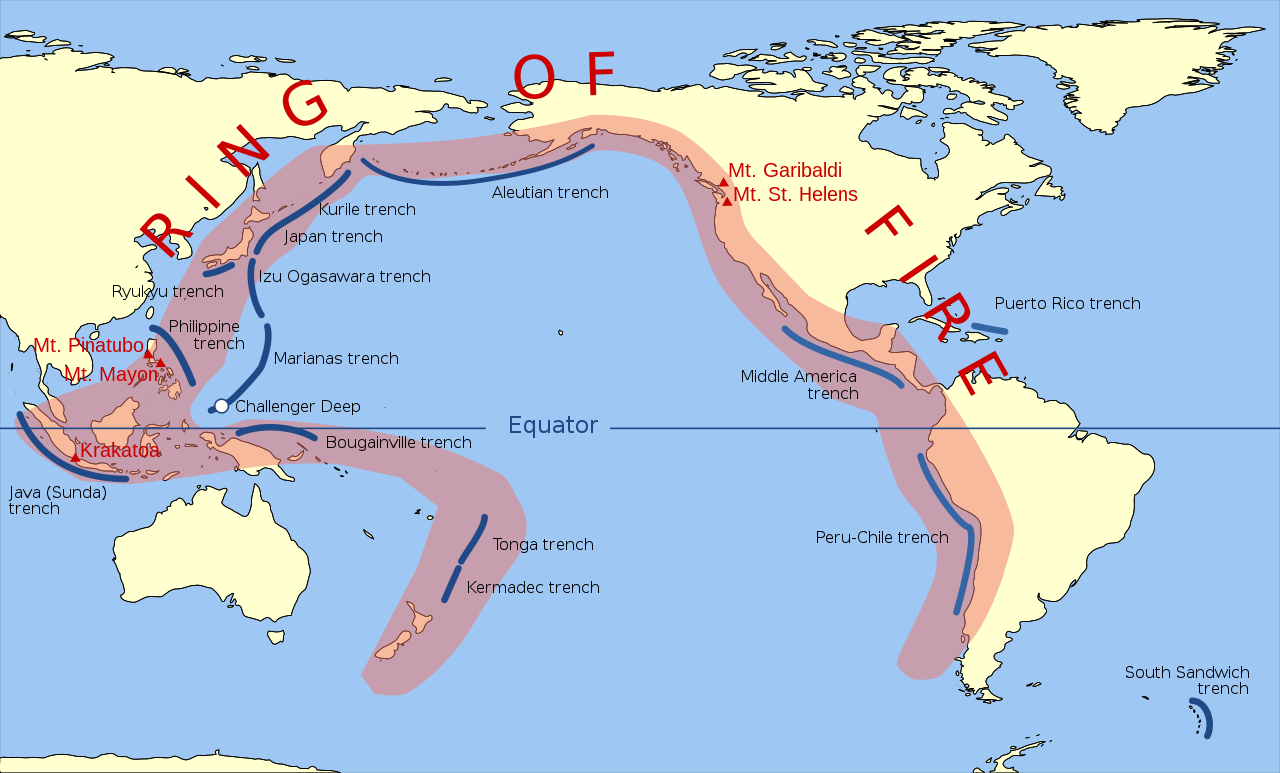
Ring of Fire
Historical precedents include the 1896 Sanriku earthquake (M8.5, tsunami killed ~22,000) and the 2011 event, which killed nearly 20,000 and caused the Fukushima nuclear crisis. Smaller quakes like the 1995 Kobe (M6.9) highlighted urban vulnerabilities despite lower magnitude. A 7.7 event fits squarely in Japan's "frequent but manageable" category—powerful enough to test infrastructure but rarely catastrophic when offshore and well-prepared for.
Decoding the Magnitude: How Much Energy Are We Talking About?
The moment magnitude scale (Mw) is logarithmic. Each whole-number increase represents about 31.6 times more energy release. A 7.7 quake releases roughly 32 times the energy of a 6.7 and over 1,000 times that of a 5.7. At Mw 7.7, the rupture likely spanned dozens of kilometers along the fault, lasting tens of seconds.
Depth matters enormously: at 20 km, this was shallow enough for strong ground motion but far enough offshore to limit direct coastal shaking. If the epicenter had been 10-15 km inland and shallower, violent shaking could have collapsed older structures, buckled roads, and triggered landslides—potentially causing hundreds of deaths and billions in damage, as seen in past events.

Map: Strong Earthquake Strikes Near Japan.
Tsunami Mechanics: Why 80 cm Instead of 3 Meters?
Tsunamis form when seafloor displacement pushes water upward. Here, the quake's offshore location and moderate displacement produced waves that dissipated energy before landfall. The JMA's early warning system—detecting P-waves seconds before destructive S-waves—gave coastal areas precious minutes. Observed 80 cm waves at Kuji caused minor flooding at ports but no widespread inundation.
For context, a 3-meter tsunami (the warned maximum) could flood low-lying areas, sweep away vehicles, and damage ports or fishing fleets. Yet Japan's seawalls, built or upgraded post-2011 (some exceeding 10-15 meters), performed as designed. Minor waves were absorbed without breaching defenses.
Tsunamis form when seafloor displacement pushes water upward. Here, the quake's offshore location and moderate displacement produced waves that dissipated energy before landfall. The JMA's early warning system—detecting P-waves seconds before destructive S-waves—gave coastal areas precious minutes. Observed 80 cm waves at Kuji caused minor flooding at ports but no widespread inundation.
For context, a 3-meter tsunami (the warned maximum) could flood low-lying areas, sweep away vehicles, and damage ports or fishing fleets. Yet Japan's seawalls, built or upgraded post-2011 (some exceeding 10-15 meters), performed as designed. Minor waves were absorbed without breaching defenses.
Japan Tsunami Warning Latest News: 80-cm Wave Hits Northern Japan Port After Warning of Higher Waves; Authorities Monitor Coastal Safety.
Potential Tsunami Damage in a Worst-Case 7.7 Scenario
Low-lying ports/cities: Total destruction of wooden structures, erosion of beaches, contamination of farmland.
Economic hit: Fishing industry losses in the tens of millions; port closures disrupting supply chains.
Human toll: Drowning risks highest for those ignoring warnings—potentially dozens to hundreds if waves hit populated beaches during peak hours.
In this case, the system worked flawlessly.
Ground Shaking and Infrastructure: What a 7.7 Can Actually Destroy
Near the epicenter, a 7.7 quake produces peak ground acceleration capable of shifting furniture, cracking walls, and toppling unsecured objects. In populated areas:
Unreinforced masonry or older wooden homes: Widespread collapse (as in 1995 Kobe, where ~6,000 died).
Modern high-rises: Sway dramatically but rarely fail thanks to base isolation, viscous dampers, and tuned mass dampers. Japan mandates strict seismic codes updated after every major event.
Lifelines: Power outages, water pipe breaks, railway suspensions. The 2011 quake caused weeks-long disruptions; a 7.7 offshore might limit this to hours or days.
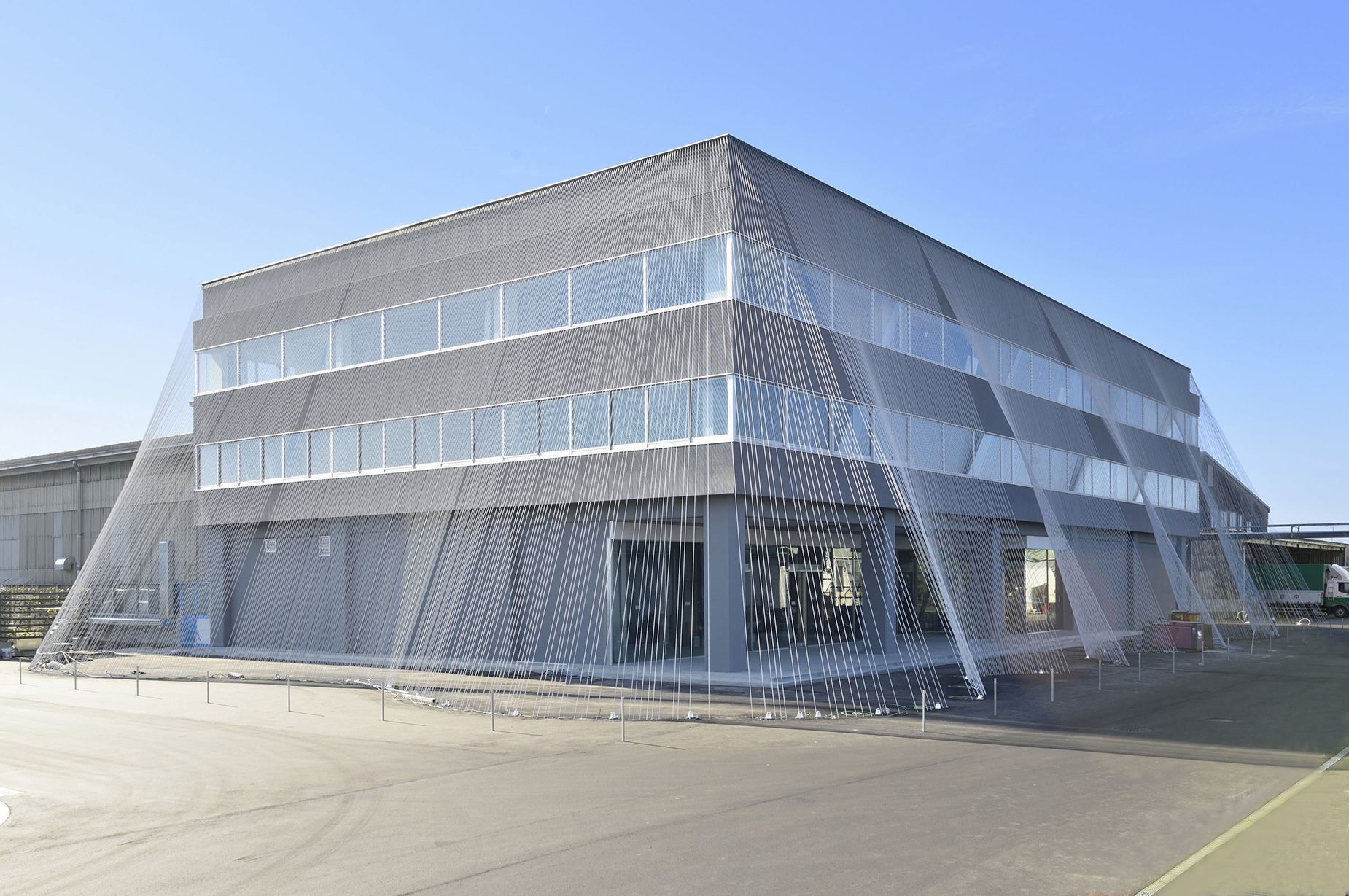
How Japan spent more than a century earthquake-proofing its architecture.
Japan's buildings incorporate cutting-edge tech: rubber bearings that let structures "float" on isolators, steel braces, and computer-controlled active damping. Even in intense shaking, collapse risk for post-1981 structures is near zero. This quake's felt intensity in Tokyo (distant) caused no reported structural issues.
Hypothetical Maximum Damage from a Similar 7.7 If the quake struck directly under a city like Sendai at shallower depth:
Casualties: 100-1,000+ depending on time of day (nighttime lower).
Hypothetical Maximum Damage from a Similar 7.7 If the quake struck directly under a city like Sendai at shallower depth:
Casualties: 100-1,000+ depending on time of day (nighttime lower).
Economic loss: $10-50 billion (infrastructure, business interruption).
Secondary hazards: Fires from ruptured gas lines, landslides in hilly terrain, soil liquefaction turning ground to quicksand.
Fortunately, this event's offshore epicenter minimized these.
Aftershocks, Mega-Quake Advisory, and Long-Term Risk
The JMA's special advisory is precautionary. Stress transfer from the 7.7 could nudge nearby faults, raising the short-term probability of an M8+ event from ~0.1% to 1% in the next week. This is still low in absolute terms but warrants heightened alertness—no panic, just preparation.
Aftershocks of M5-6 are expected for weeks, capable of further minor damage or triggering small tsunamis.
Japan's World-Leading Preparedness: Lessons That Save Lives
Japan invests heavily:
Early Warning System: Phones buzz seconds before shaking.
Building Codes: Among the strictest globally.
Community Drills: Annual "Disaster Prevention Day" on September 1.
Tsunami Evacuation Towers and Maps: Ubiquitous in coastal zones.
Nuclear Safeguards: Post-Fukushima upgrades ensure safety.
Compare to less-prepared regions: A similar 7.7 in a developing nation could kill thousands due to poor construction. Japan's resilience turned potential catastrophe into a manageable alert.
 Construction expertise from Japan: earthquake proof buildings.
Economic and Societal Ripple Effects
Even with minimal direct damage, indirect costs mount: stock market dips, tourism pauses, supply chain hiccups for auto and electronics industries (Japan is a global hub). Psychological impact—fear of "the big one"—can affect mental health and consumer confidence.
Long-term, such events reinforce investment in resilience. Reconstruction after 2011 spurred economic growth in affected regions via infrastructure upgrades.
Even with minimal direct damage, indirect costs mount: stock market dips, tourism pauses, supply chain hiccups for auto and electronics industries (Japan is a global hub). Psychological impact—fear of "the big one"—can affect mental health and consumer confidence.
Long-term, such events reinforce investment in resilience. Reconstruction after 2011 spurred economic growth in affected regions via infrastructure upgrades.
How Much Damage Can a 7.7 Cause? Scenario Breakdown
Offshore, Shallow (This Event): Minimal direct damage; tsunami risk manageable. Cost: Low millions. Lives: Near zero.
Inland, Shallow: Catastrophic in urban zones—thousands of buildings damaged, fires, infrastructure failure. Cost: Tens of billions. Lives: Hundreds to low thousands.
Combined with Tsunami (Worst-Case): Like a mini-Tohoku. Coastal wipeout, nuclear risk if near plants. Cost: $100B+. Lives: 1,000+.
Factors amplifying damage: Time of day, soil type (soft sediment worsens shaking), population density, secondary fires/landslides.
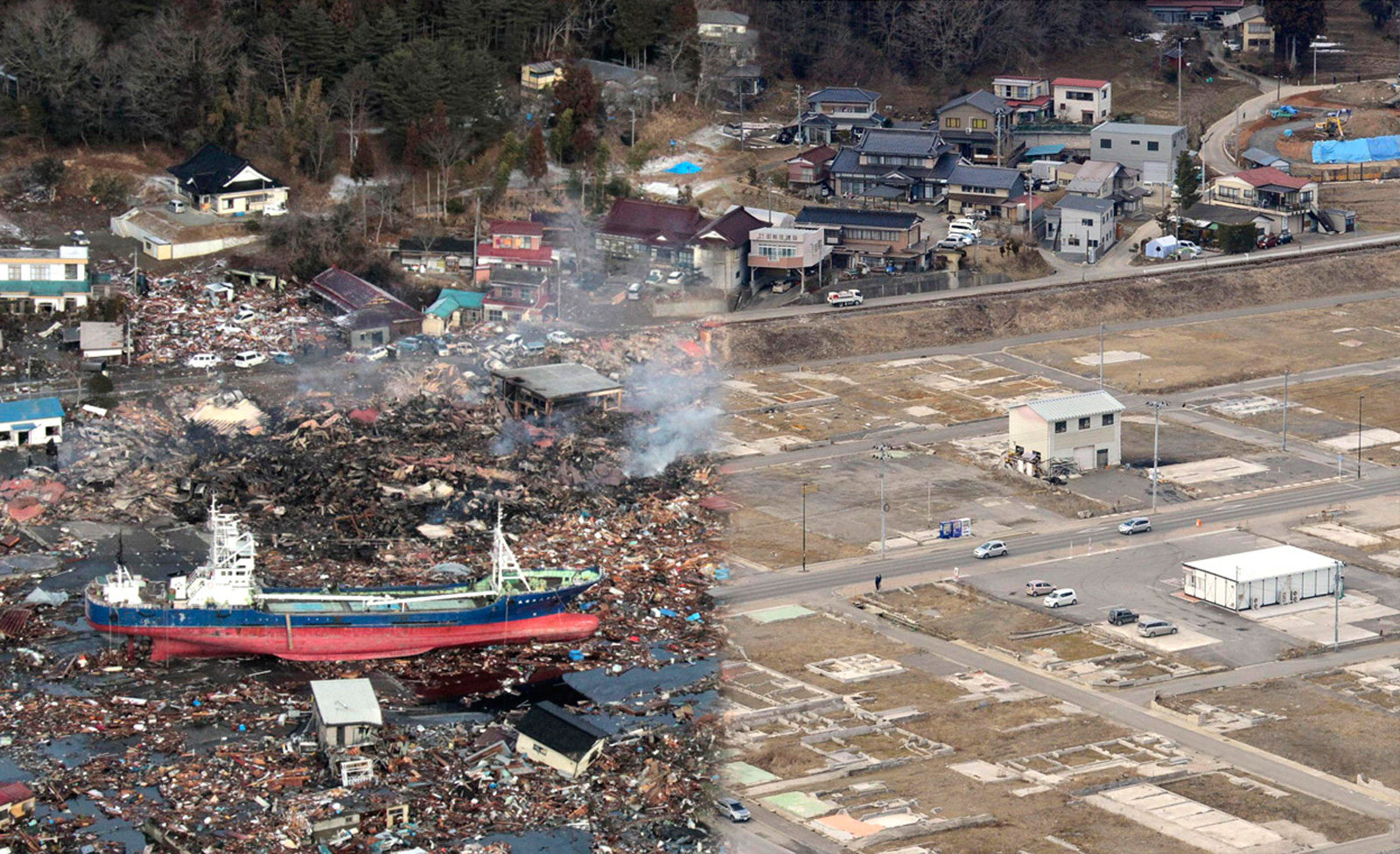
Japan Earthquake, 2 Years Later: Before and After.
(Above: 2011 Tohoku before/after for scale—far more destructive than 2026's event.)
Global Context and What This Means for the Future.
Earthquakes are inevitable in Japan, but death tolls have plummeted over decades due to engineering and education. Climate change may indirectly worsen tsunamis via sea-level rise, underscoring the need for adaptive defenses.
Experts emphasize: Preparedness turns disasters into inconveniences. This 7.7 was a test passed with flying colors.
Resilience in the Face of Uncertainty.
As of April 21, 2026, the 7.7-magnitude quake has caused limited observable damage—thanks to location, timing, and Japan's unparalleled systems. Yet it underscores a core truth: a quake of this size can unleash immense destruction if conditions align differently. The JMA's mega-quake advisory is not alarmism but prudent science.
Japan will continue monitoring, citizens will stay vigilant, and the world watches a nation that refuses to be defined by its geology. In the Ring of Fire, survival is not luck—it's preparation.
As of April 21, 2026, the 7.7-magnitude quake has caused limited observable damage—thanks to location, timing, and Japan's unparalleled systems. Yet it underscores a core truth: a quake of this size can unleash immense destruction if conditions align differently. The JMA's mega-quake advisory is not alarmism but prudent science.
Japan will continue monitoring, citizens will stay vigilant, and the world watches a nation that refuses to be defined by its geology. In the Ring of Fire, survival is not luck—it's preparation.
Comments
Post a Comment