
Oil Prices Surge Past $114/Barrel as Iran War Disrupts Production and Strait of Hormuz Shipping.
Crude Oil Prices Surpass $114 a Barrel as Iran War Impedes Production and Shipping.
On Monday, March 9, 2026, global crude oil prices dramatically breached $114 per barrel for the first time since 2022, driven by escalating conflict in the Middle East involving Iran, Israel, and the United States.
This sharp surge reflects severe disruptions to oil production and critical shipping routes, sending shockwaves through energy markets and raising alarms about inflation, economic slowdown, and higher consumer costs worldwide.
The $100 Barrel: How the Strait of Hormuz Crisis is Stress-Testing Global Markets<!-- -->
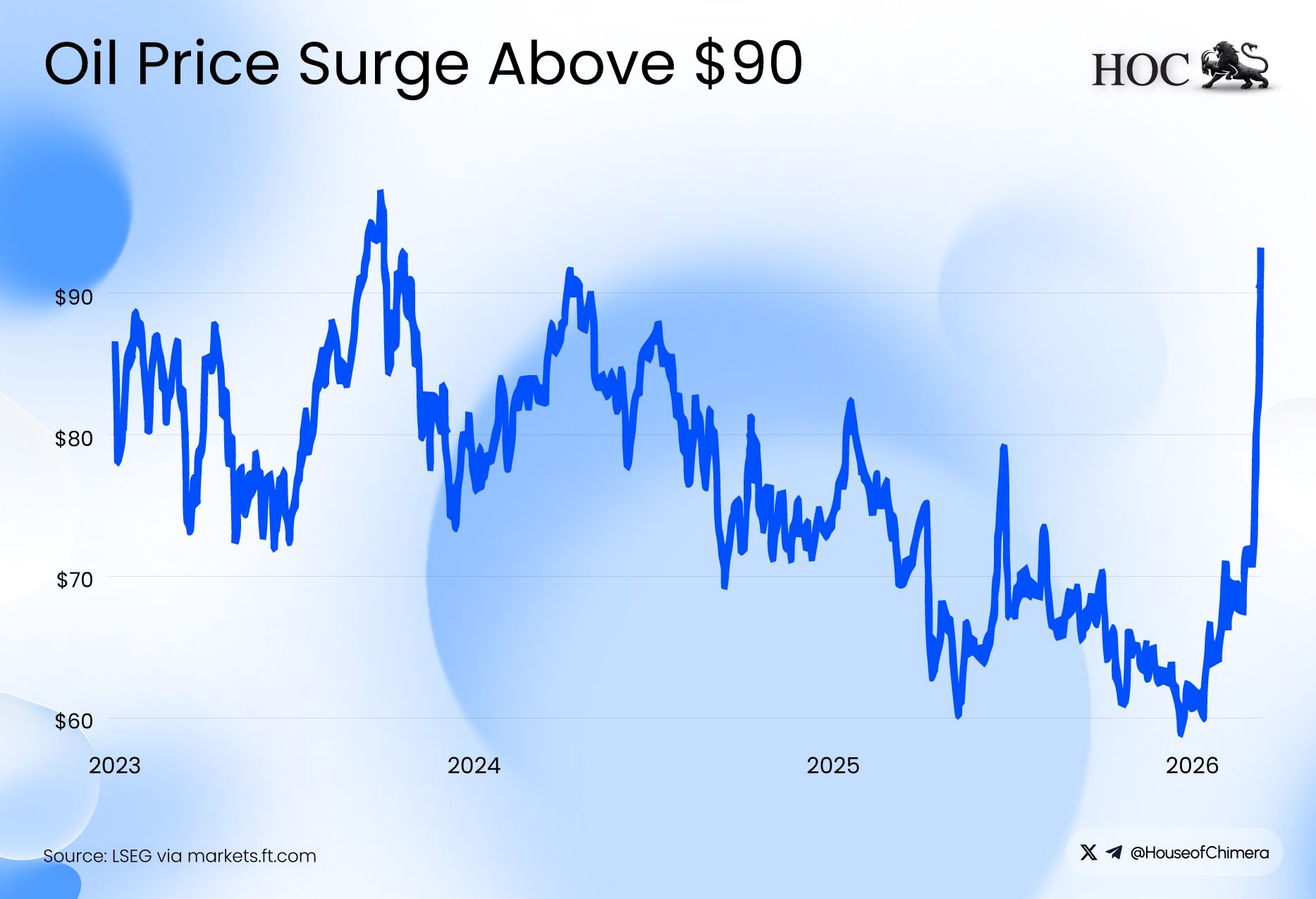
Oil price chart illustrating the dramatic surge above $90 and toward $114 in early 2026 amid geopolitical tensions.
The $100 Barrel: How the Strait of Hormuz Crisis is Stress-Testing Global Markets<!-- -->
Oil price chart illustrating the dramatic surge above $90 and toward $114 in early 2026 amid geopolitical tensions.
Brent crude, the international benchmark, surged past $114 shortly after trading resumed on the Chicago Mercantile Exchange, marking a staggering 23% increase from Friday's close of $92.69. West Texas Intermediate (WTI), the U.S. benchmark, followed suit, trading around $114—a 25% jump from $90.90 on Friday. These gains built on massive weekly rises: U.S. crude up 36% and Brent up 28% the previous week.

Thai Enquirer News Summary - March 9, 2026
Historic Brent crude price chart showing the explosive rally triggered by the Iran war in March 2026.
The conflict, now in its second week following initial U.S. and Israeli strikes on Iran starting March 1, has directly targeted energy infrastructure. Overnight Israeli attacks on oil depots in Tehran left facilities smoldering, killing four people according to Iranian reports. Israel's military justified the strikes, claiming the depots supplied fuel for missile launches. Bahrain accused Iran of hitting a vital desalination plant, further escalating civilian impacts and regional instability.

Black smoke plunges Tehran into darkness after Israeli strikes on oil depots.
Black smoke rises over Tehran following Israeli strikes on oil depots, highlighting direct attacks on energy infrastructure.
Iran's parliament speaker, Mohammad Bagher Qalibaf, warned of spiraling effects on the oil industry. Iran exports about 1.6 million barrels per day, primarily to China; any prolonged halt could force buyers to seek alternatives, intensifying global competition and prices.
The most critical chokepoint is the Strait of Hormuz, through which roughly 15 million barrels—about 20% of global daily oil supply—typically flow. Bordered by Iran to the north, the strait has seen tanker traffic grind to a near halt due to threats of missile and drone attacks. Independent firm Rystad Energy notes this has effectively stopped exports from key producers like Saudi Arabia, Kuwait, Iraq, Qatar, Bahrain, UAE, and even Iran itself.
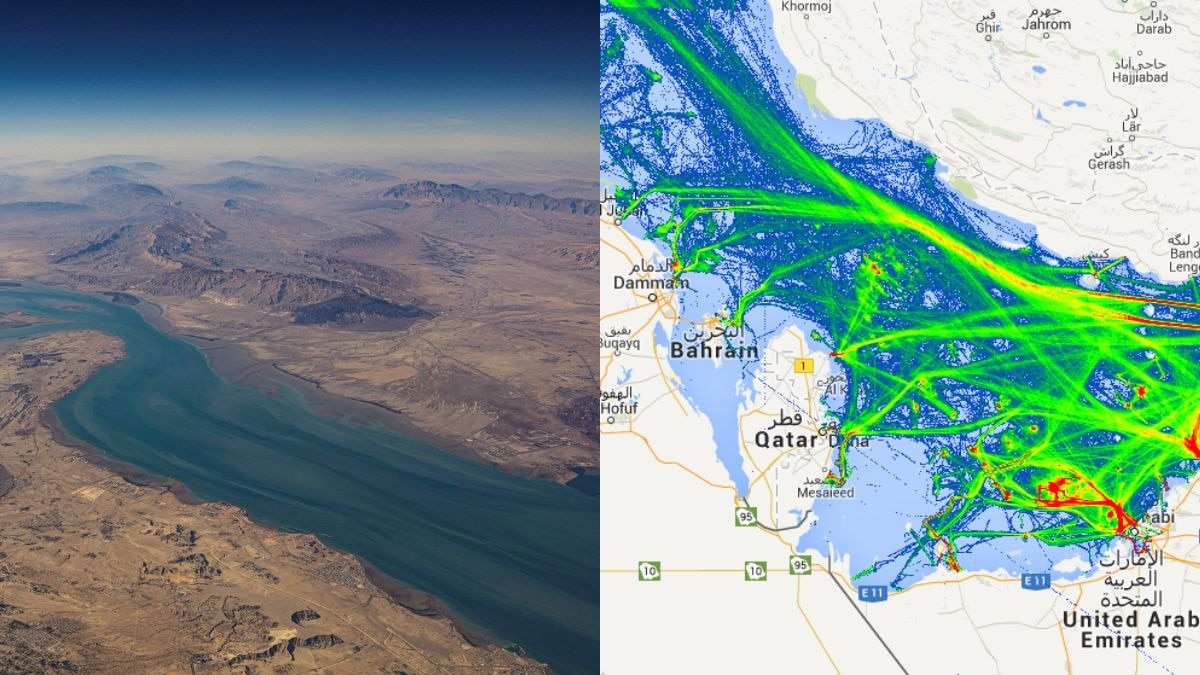
Satellite images reveal massive tanker jam in Strait of Hormuz: What caused it?
Satellite view of the Strait of Hormuz, the vital chokepoint now disrupted by conflict threats.
Tanker tracking data reveals massive congestion and halted movements, with AIS signals showing vessels clustered or rerouting amid GPS jamming and security fears.
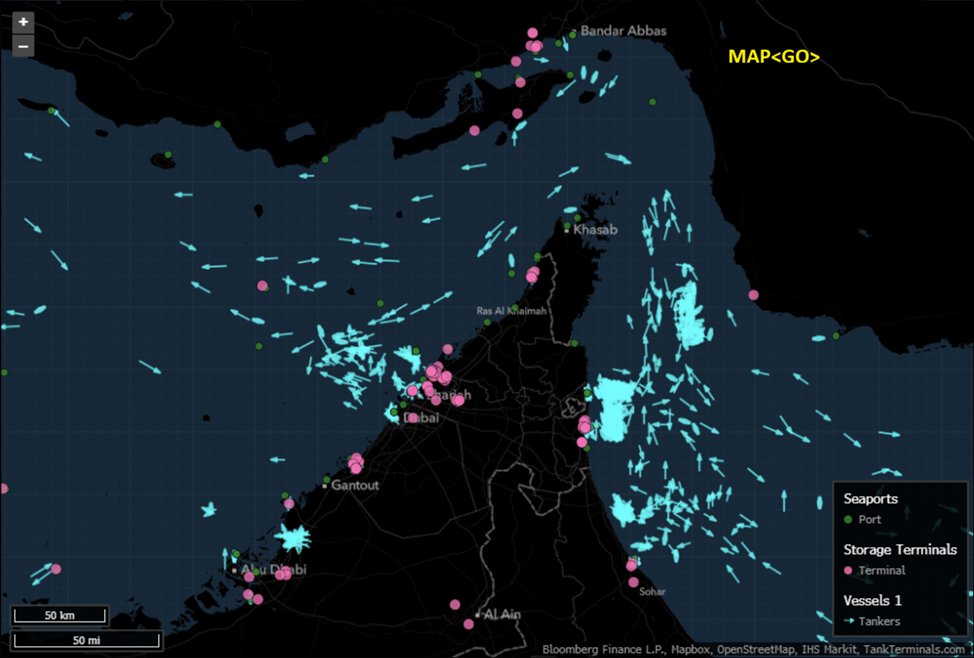
Live look at tanker traffic in the Strait of Hormuz via Bloomberg MAP<GO> ~20% of the world's oil passes through this chokepoint every day. Iran's coastline runs along the entire northern edge.
Tanker tracking data reveals massive congestion and halted movements, with AIS signals showing vessels clustered or rerouting amid GPS jamming and security fears.
Live look at tanker traffic in the Strait of Hormuz via Bloomberg MAP<GO> ~20% of the world's oil passes through this chokepoint every day. Iran's coastline runs along the entire northern edge.
Bloomberg map depicting tanker traffic jam in the Strait of Hormuz, with vessels backed up due to threats.
In response, Iraq, Kuwait, and the UAE have curtailed production as storage tanks overflow from export bottlenecks. Attacks on facilities by Iran, Israel, and the U.S. have compounded supply fears, creating a perfect storm for prices.
This marks the first time Brent exceeded $100 since July 29, 2022 ($104 peak), and WTI since June 30, 2022 ($105.76). The rapid climb has rattled financial markets, with stocks plunging on fears of stagflation—higher energy costs fueling inflation while curbing consumer spending, the U.S. economy's main driver.
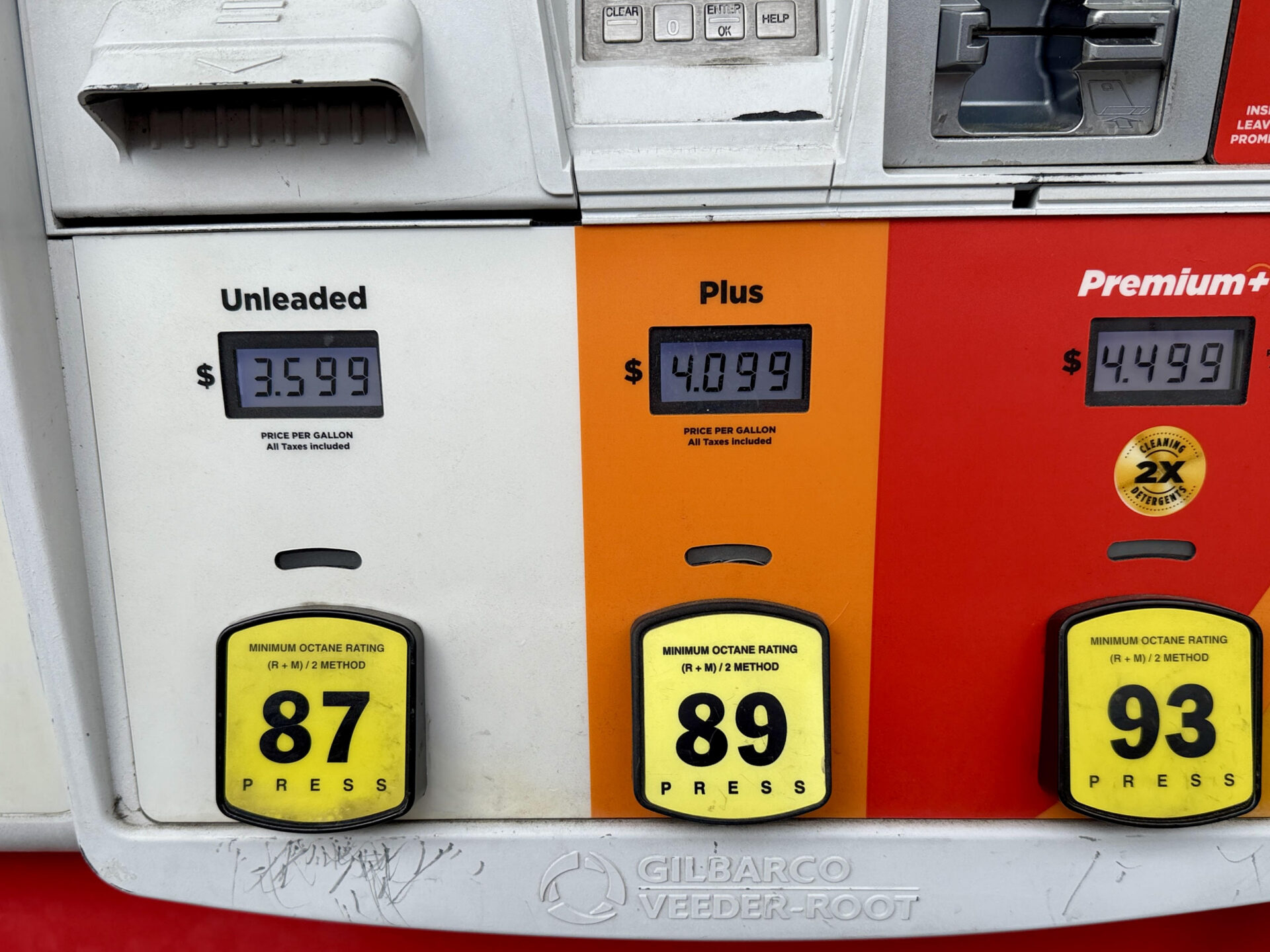
In the United States, gasoline prices jumped to $3.45 per gallon by Sunday, March 8—a 47-cent weekly increase per AAA data. Diesel reached $4.60 per gallon, up 83 cents. These hikes hit consumers hard, especially in import-reliant nations.
Villagers paying more for gas in wake of U.S. attack on Iran.
U.S. gas pump prices climbing to around $3.45–$3.60 per gallon amid the oil surge.
Natural gas prices also rose, though less dramatically, to $3.33 per 1,000 cubic feet late Sunday—up 4.6% from Friday's $3.19, following an 11% weekly gain.
Energy Secretary Chris Wright, on CNN's "State of the Union," attempted to calm nerves, predicting U.S. gas prices would drop below $3 per gallon "before too long." However, analysts warn that sustained prices above $100 could overwhelm the global economy.
Goldman Sachs and others forecast potential climbs to $150 if disruptions persist, with prolonged Hormuz closure risking severe shortages. China, heavily reliant on Iranian oil, may accelerate diversification, but short-term gaps could exacerbate volatility.
The war's expansion—spilling into civilian targets and infrastructure—underscores energy's vulnerability to geopolitics. Markets remain on edge, with traders monitoring cease-fire talks or escalations. If the conflict drags on, higher costs could slow growth, hit transport sectors, and prompt policy responses like Strategic Petroleum Reserve releases.
This surge serves as a stark reminder of the Strait of Hormuz's strategic importance and how quickly regional tensions can upend global energy security. As of March 9, 2026, the world watches anxiously, with oil at multi-year highs reshaping economic outlooks.
Natural gas prices also rose, though less dramatically, to $3.33 per 1,000 cubic feet late Sunday—up 4.6% from Friday's $3.19, following an 11% weekly gain.
Energy Secretary Chris Wright, on CNN's "State of the Union," attempted to calm nerves, predicting U.S. gas prices would drop below $3 per gallon "before too long." However, analysts warn that sustained prices above $100 could overwhelm the global economy.
Goldman Sachs and others forecast potential climbs to $150 if disruptions persist, with prolonged Hormuz closure risking severe shortages. China, heavily reliant on Iranian oil, may accelerate diversification, but short-term gaps could exacerbate volatility.
The war's expansion—spilling into civilian targets and infrastructure—underscores energy's vulnerability to geopolitics. Markets remain on edge, with traders monitoring cease-fire talks or escalations. If the conflict drags on, higher costs could slow growth, hit transport sectors, and prompt policy responses like Strategic Petroleum Reserve releases.
This surge serves as a stark reminder of the Strait of Hormuz's strategic importance and how quickly regional tensions can upend global energy security. As of March 9, 2026, the world watches anxiously, with oil at multi-year highs reshaping economic outlooks.
Comments
Post a Comment