EC Releases First Supplementary Voters’ List in West Bengal After SIR Adjudications.

EC Releases First Supplementary Voters’ List In West Bengal After SIR Adjudications.
The Election Commission of India (ECI) published the first supplementary voters’ list after the Special Intensive Revision (SIR) adjudications in poll-bound West Bengal late on Monday night.
EC Releases First Supplementary Voters’ List In West Bengal After SIR Adjudications.
The Election Commission of India (ECI) published the first supplementary voters’ list after the Special Intensive Revision (SIR) adjudications in poll-bound West Bengal late on Monday night.
The booth-wise lists were made available on the ECI’s official website and the CEO West Bengal portal around 11:55 pm.

Voter List 2026 West Bengal (বিচারাধীন ভোটার লিস্ট ) Download SIR Final Voter List 2026 PDF West Bengal | supplementary voter list 2026.
This marks a significant milestone in the ongoing effort to clean and update the electoral rolls ahead of the two-phase West Bengal Assembly elections scheduled for April 23 and April 29, 2026, with counting on May 4.
The supplementary list contains the names of voters whose cases have been adjudicated by judicial officers in accordance with Supreme Court directives. Chief Electoral Officer (CEO) Manoj Kumar Agarwal confirmed that around 29 lakh names have been adjudicated so far.
Voter List 2026 West Bengal (বিচারাধীন ভোটার লিস্ট ) Download SIR Final Voter List 2026 PDF West Bengal | supplementary voter list 2026.
This marks a significant milestone in the ongoing effort to clean and update the electoral rolls ahead of the two-phase West Bengal Assembly elections scheduled for April 23 and April 29, 2026, with counting on May 4.
The supplementary list contains the names of voters whose cases have been adjudicated by judicial officers in accordance with Supreme Court directives. Chief Electoral Officer (CEO) Manoj Kumar Agarwal confirmed that around 29 lakh names have been adjudicated so far.
It was not immediately clear how many of these were included in the first supplementary list (approved) and how many were deleted (rejected). Earlier, the final voters’ list published on February 28 had marked approximately 60.06 lakh names as “under adjudication”.

Shri Manoj Kumar Agarwal IAS (RR : WB : 1990) assumed charge as the Chief Electoral Officer West Bengal today. #ECI @ECISVEEP @SpokespersonECI @anuj_chandak @PIBKolkata.
Shri Manoj Kumar Agarwal IAS (RR : WB : 1990) assumed charge as the Chief Electoral Officer West Bengal today. #ECI @ECISVEEP @SpokespersonECI @anuj_chandak @PIBKolkata.
Background: The Special Intensive Revision (SIR) 2026
The SIR exercise, conducted with 01 January 2026 as the qualifying date, was one of the most rigorous voter list revisions in recent Indian electoral history. Booth Level Officers (BLOs) carried out 100% physical verification, distributing and collecting enumeration forms door-to-door.
The SIR exercise, conducted with 01 January 2026 as the qualifying date, was one of the most rigorous voter list revisions in recent Indian electoral history. Booth Level Officers (BLOs) carried out 100% physical verification, distributing and collecting enumeration forms door-to-door.
The process aimed to remove ineligible entries — deceased persons, permanently shifted or migrated voters, and duplicates — while ensuring genuine electors are not left out.
Key statistics from the final roll published on February 28, 2026:Total electors in the final roll: Approximately 6.44 crore (64,452,609)
Names deleted during the entire SIR process: Over 63.66 lakh (including those removed before and after the draft)
Names marked “under adjudication” due to logical discrepancies: 60,06,675 (about 8.5% of the electorate)
New additions through claims: Around 1.82 lakh
The “under adjudication” category primarily covered cases with discrepancies such as mismatched documents, unverified addresses, or unresolved claims and objections. These could not be summarily deleted or included without due process, leading to the Supreme Court’s intervention.

Revised Schedule of Special Intensive Revision of Electoral Roll - 2026 #SIR @ECISVEEP @SpokespersonECI @AIRKolkata @PIBKolkata
Key statistics from the final roll published on February 28, 2026:Total electors in the final roll: Approximately 6.44 crore (64,452,609)
Names deleted during the entire SIR process: Over 63.66 lakh (including those removed before and after the draft)
Names marked “under adjudication” due to logical discrepancies: 60,06,675 (about 8.5% of the electorate)
New additions through claims: Around 1.82 lakh
The “under adjudication” category primarily covered cases with discrepancies such as mismatched documents, unverified addresses, or unresolved claims and objections. These could not be summarily deleted or included without due process, leading to the Supreme Court’s intervention.
Revised Schedule of Special Intensive Revision of Electoral Roll - 2026 #SIR @ECISVEEP @SpokespersonECI @AIRKolkata @PIBKolkata
Supreme Court’s Role and Judicial Adjudication
Following multiple petitions and concerns over large-scale deletions, the Supreme Court issued detailed directions to ensure fairness and transparency. The apex court mandated the deployment of judicial officers (initially around 530, later expanded) from West Bengal, Odisha, and Jharkhand to act as Electoral Registration Officers (EROs) for adjudication.
The Court also directed the formation of 19 district-level appellate tribunals (presided over by former High Court judges where possible) to hear appeals against rejections. This mechanism was put in place to prevent arbitrary executive decisions and provide an independent judicial safeguard.
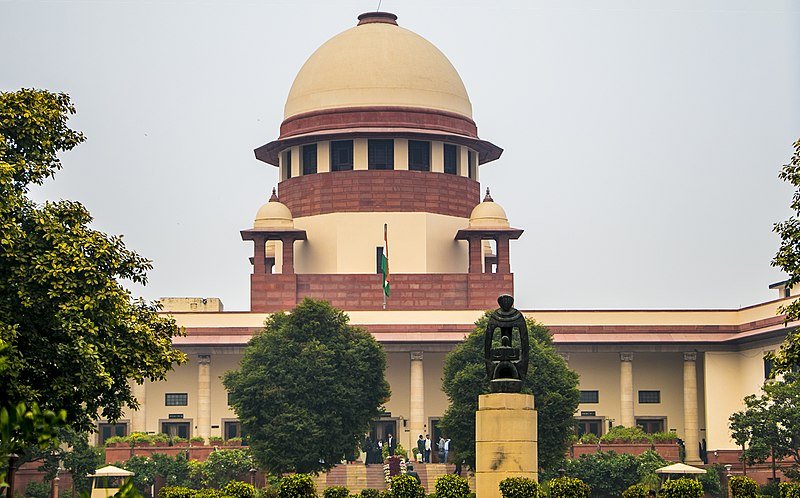
The Indian Supreme Court and “Compelled Mootness”
Following multiple petitions and concerns over large-scale deletions, the Supreme Court issued detailed directions to ensure fairness and transparency. The apex court mandated the deployment of judicial officers (initially around 530, later expanded) from West Bengal, Odisha, and Jharkhand to act as Electoral Registration Officers (EROs) for adjudication.
The Court also directed the formation of 19 district-level appellate tribunals (presided over by former High Court judges where possible) to hear appeals against rejections. This mechanism was put in place to prevent arbitrary executive decisions and provide an independent judicial safeguard.
The Indian Supreme Court and “Compelled Mootness”
Hearings and verification took place between mid-December 2025 and early February 2026, with extensions granted to allow proper scrutiny of documents. The final roll was published on February 28 even as adjudication continued, with affected voters’ names kept in a separate “under adjudication” column. Their voting rights would be activated only through subsequent supplementary lists.
What the First Supplementary List Means
The list released on Monday night (March 23-24, 2026) is the first batch of outcomes from the judicial adjudication process. It includes:Approved names: Eligible voters whose documents were found in order and are now added to the electoral roll.
Rejected names: Those whose claims could not be substantiated and are being deleted.
Exact breakup of inclusions vs deletions was not immediately disclosed by the ECI or CEO office. Officials indicated that more supplementary lists will follow periodically as remaining cases (out of the 60+ lakh) are decided. A deletion list (for confirmed removals) was also expected alongside or shortly after.
Voters can now check their status on the official portals:National Voters’ Service Portal: voters.eci.gov.in
CEO West Bengal website: ceowestbengal.wb.gov.in
By visiting their respective polling stations or contacting BLOs.
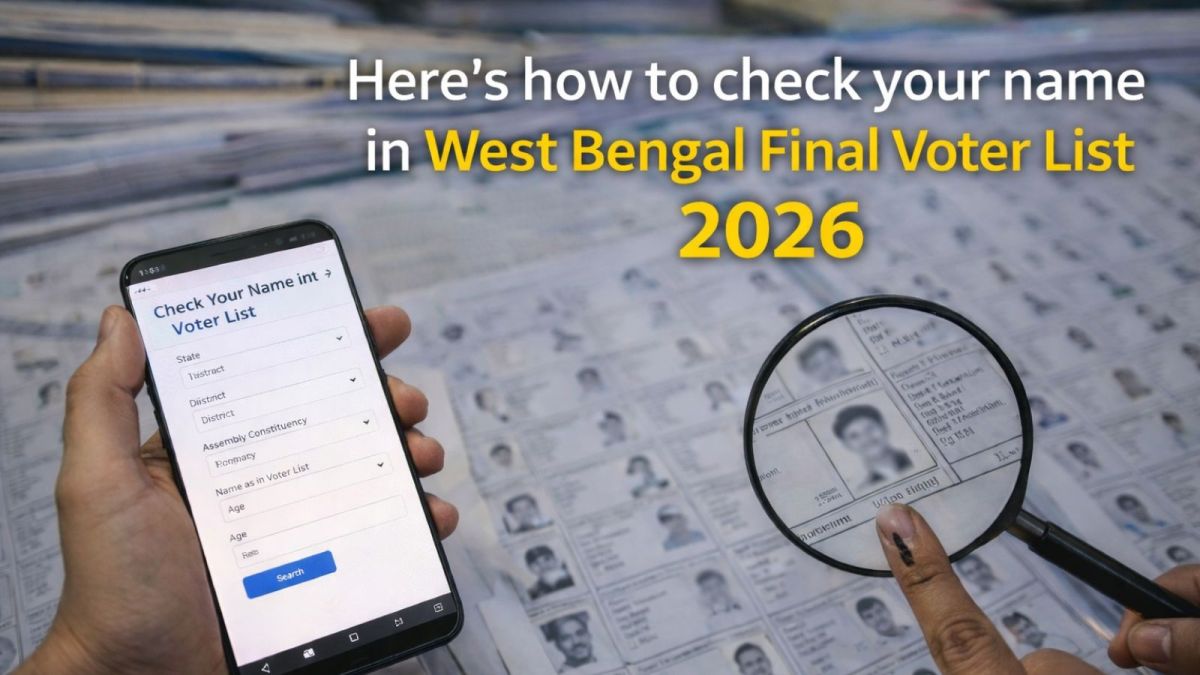
West Bengal SIR final electoral roll: Here's how to check your name in voter list 2026
What the First Supplementary List Means
The list released on Monday night (March 23-24, 2026) is the first batch of outcomes from the judicial adjudication process. It includes:Approved names: Eligible voters whose documents were found in order and are now added to the electoral roll.
Rejected names: Those whose claims could not be substantiated and are being deleted.
Exact breakup of inclusions vs deletions was not immediately disclosed by the ECI or CEO office. Officials indicated that more supplementary lists will follow periodically as remaining cases (out of the 60+ lakh) are decided. A deletion list (for confirmed removals) was also expected alongside or shortly after.
Voters can now check their status on the official portals:National Voters’ Service Portal: voters.eci.gov.in
CEO West Bengal website: ceowestbengal.wb.gov.in
By visiting their respective polling stations or contacting BLOs.
West Bengal SIR final electoral roll: Here's how to check your name in voter list 2026
Impact on the Electorate and Elections
West Bengal has around 80,719 polling stations across 294 Assembly constituencies. The SIR process has already reduced the voter base from the previous draft figures, with the final approved electorate standing at roughly 6.44 crore before this supplementary addition.
The adjudication of 29 lakh cases so far is a massive administrative achievement involving over 700 judicial officers. However, with polling just a month away for the first phase, the remaining cases continue to cause anxiety among voters, especially in districts with high numbers of flagged entries such as Murshidabad, Malda, North Dinajpur, and parts of South 24 Parganas.
Political parties have been closely monitoring the process. The ruling Trinamool Congress and opposition parties have raised concerns over potential disenfranchisement, while the ECI has emphasised that the exercise is aimed at ensuring “no genuine voter is left behind and no fake voter is allowed”.
Security was tightened across all 23 districts ahead of the list’s release, with central forces deployed to maintain law and order at sensitive booths and during document verification.
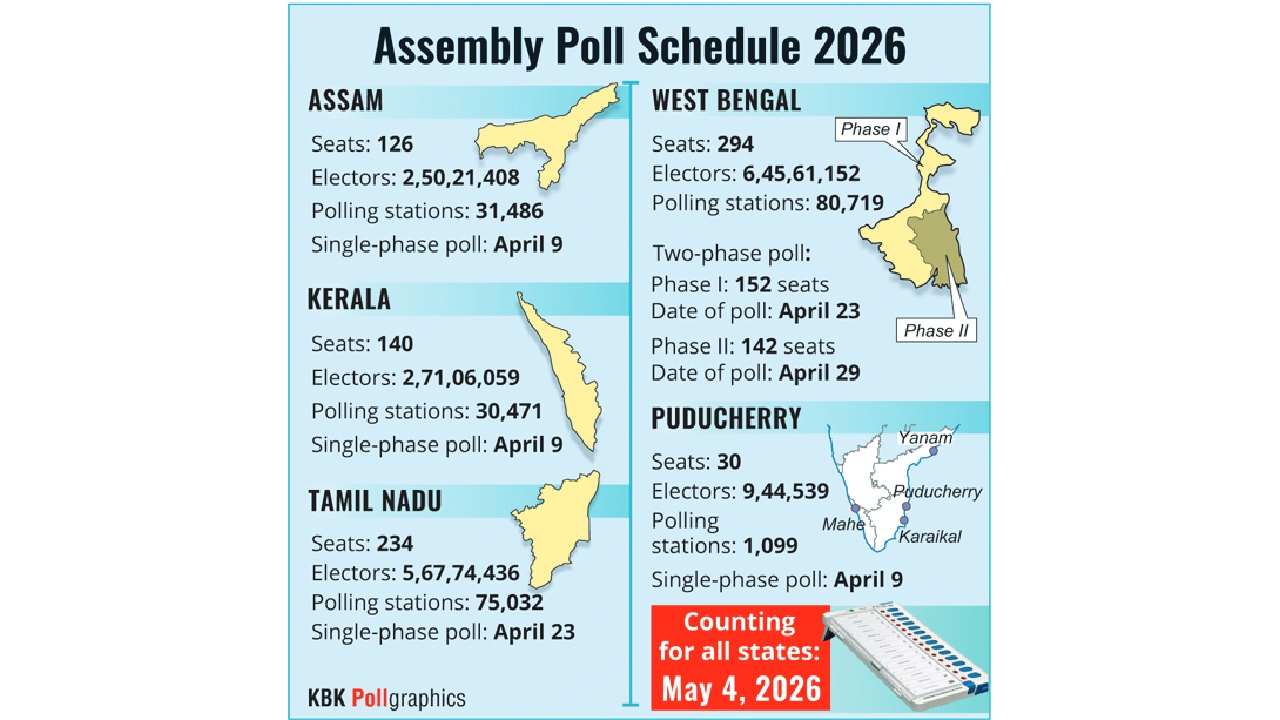
West Bengal to vote in two phases, ECI announces.
West Bengal has around 80,719 polling stations across 294 Assembly constituencies. The SIR process has already reduced the voter base from the previous draft figures, with the final approved electorate standing at roughly 6.44 crore before this supplementary addition.
The adjudication of 29 lakh cases so far is a massive administrative achievement involving over 700 judicial officers. However, with polling just a month away for the first phase, the remaining cases continue to cause anxiety among voters, especially in districts with high numbers of flagged entries such as Murshidabad, Malda, North Dinajpur, and parts of South 24 Parganas.
Political parties have been closely monitoring the process. The ruling Trinamool Congress and opposition parties have raised concerns over potential disenfranchisement, while the ECI has emphasised that the exercise is aimed at ensuring “no genuine voter is left behind and no fake voter is allowed”.
Security was tightened across all 23 districts ahead of the list’s release, with central forces deployed to maintain law and order at sensitive booths and during document verification.
West Bengal to vote in two phases, ECI announces.
How to Check Your Name in the Updated ListsVisit voters.eci.gov.in or ceowestbengal.wb.gov.in
Select “West Bengal” and your district/assembly constituency
Enter your name, age, or epic number (voter ID)
Download the relevant supplementary or deletion list for your polling station (booth-wise PDFs are available)
Alternatively, use the ECINET mobile app or contact your local BLO
If your name was under adjudication and does not appear in the approved supplementary list, you may file an appeal before the designated appellate tribunal in your district.
Broader Context and Challenges
The SIR in West Bengal was unprecedented in scale. Over 1.6 crore people were called for hearings, and 1.3 crore cases involved logical discrepancies. The process faced logistical hurdles, including delays in document upload and verification, prompting multiple Supreme Court interventions.
Critics argued that the large number of flagged names (especially in certain regions) could affect turnout, while the ECI maintained that the drive was necessary to remove bogus entries built up over years. The gender ratio improved slightly in the final roll (from 956 to 964), and special focus was given to PwD, overseas, and young electors.
With two-phase polling, the ECI has set a tight timeline. Further supplementary lists are expected in the coming days/weeks. The second supplementary may come around early April, depending on adjudication progress.
What Voters and Parties Should Do NowVoters: Immediately check the new lists. If your name is missing or rejected, gather documents and approach the appellate tribunal without delay. Keep photocopies of all submissions.
Political Parties: Booth-level workers should assist genuine voters in filing claims or appeals. Monitor deletions in their strongholds.
Officials: District election officers and BLOs must ensure wide publicity of the lists through posters, announcements, and digital means.
The ECI has reiterated its commitment to a free, fair, and transparent electoral process. The publication of this first supplementary list is a step towards resolving the uncertainty that has gripped lakhs of families since February.
Looking Ahead
As adjudication continues, the final shape of West Bengal’s electoral roll for the 2026 Assembly polls will become clearer. The exercise has already led to the removal of millions of dubious entries, potentially making the voter list one of the cleanest in the country.
However, the real test will be smooth implementation on polling days — ensuring every approved voter can cast their ballot without hassle, while maintaining the integrity of the process.
All updated lists (supplementary and deletion) are available for download on the ECI and CEO West Bengal websites. Voters are advised to act quickly, as the window for corrections and appeals is limited with elections approaching.
This development underscores the ECI’s efforts to balance inclusivity with accuracy in the world’s largest democracy. Stay tuned for further updates as more batches of adjudicated cases are released.
Select “West Bengal” and your district/assembly constituency
Enter your name, age, or epic number (voter ID)
Download the relevant supplementary or deletion list for your polling station (booth-wise PDFs are available)
Alternatively, use the ECINET mobile app or contact your local BLO
If your name was under adjudication and does not appear in the approved supplementary list, you may file an appeal before the designated appellate tribunal in your district.
Broader Context and Challenges
The SIR in West Bengal was unprecedented in scale. Over 1.6 crore people were called for hearings, and 1.3 crore cases involved logical discrepancies. The process faced logistical hurdles, including delays in document upload and verification, prompting multiple Supreme Court interventions.
Critics argued that the large number of flagged names (especially in certain regions) could affect turnout, while the ECI maintained that the drive was necessary to remove bogus entries built up over years. The gender ratio improved slightly in the final roll (from 956 to 964), and special focus was given to PwD, overseas, and young electors.
With two-phase polling, the ECI has set a tight timeline. Further supplementary lists are expected in the coming days/weeks. The second supplementary may come around early April, depending on adjudication progress.
What Voters and Parties Should Do NowVoters: Immediately check the new lists. If your name is missing or rejected, gather documents and approach the appellate tribunal without delay. Keep photocopies of all submissions.
Political Parties: Booth-level workers should assist genuine voters in filing claims or appeals. Monitor deletions in their strongholds.
Officials: District election officers and BLOs must ensure wide publicity of the lists through posters, announcements, and digital means.
The ECI has reiterated its commitment to a free, fair, and transparent electoral process. The publication of this first supplementary list is a step towards resolving the uncertainty that has gripped lakhs of families since February.
Looking Ahead
As adjudication continues, the final shape of West Bengal’s electoral roll for the 2026 Assembly polls will become clearer. The exercise has already led to the removal of millions of dubious entries, potentially making the voter list one of the cleanest in the country.
However, the real test will be smooth implementation on polling days — ensuring every approved voter can cast their ballot without hassle, while maintaining the integrity of the process.
All updated lists (supplementary and deletion) are available for download on the ECI and CEO West Bengal websites. Voters are advised to act quickly, as the window for corrections and appeals is limited with elections approaching.
This development underscores the ECI’s efforts to balance inclusivity with accuracy in the world’s largest democracy. Stay tuned for further updates as more batches of adjudicated cases are released.
Comments
Post a Comment