Indian Solar Stocks Rebound on US Duties Exemption Insight
Indian solar stocks on February 25, 2026, focusing on Waaree Energies, Premier Energies, and the broader sector. The session saw intense volatility after the US Department of Commerce announced preliminary countervailing duties (CVD) of approximately 125.87–126% on solar cells and panels imported from India (along with Indonesia and Laos), citing alleged unfair government subsidies that disadvantage US domestic manufacturers.
This triggered heavy selling in early trade, with stocks hitting lower circuits, but a key clarification from Waaree Energies helped trim losses later in the morning—though frontline names remained down 5-10% amid lingering investor caution.
Market Overview: The Trigger and Initial Sell-Off
The US action stemmed from a petition by the Alliance for American Solar Manufacturing and Trade (including Hanwha Qcells, First Solar, and Mission Solar), filed last year.
The Commerce Department determined subsidy rates of 125.87% for India, 104.38% for Indonesia, and 80.67% for Laos, following an investigation into alleged state-backed incentives enabling below-market pricing. This is a preliminary ruling—the final CVD determination is due by July 6, 2026, with a parallel anti-dumping (AD) probe ongoing that could add further duties.
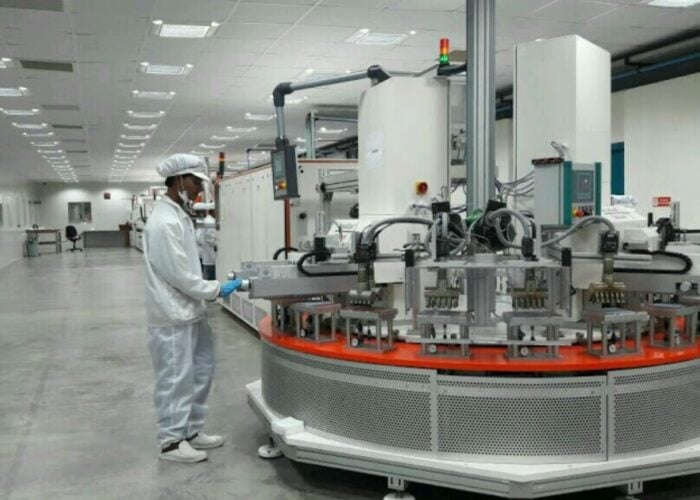
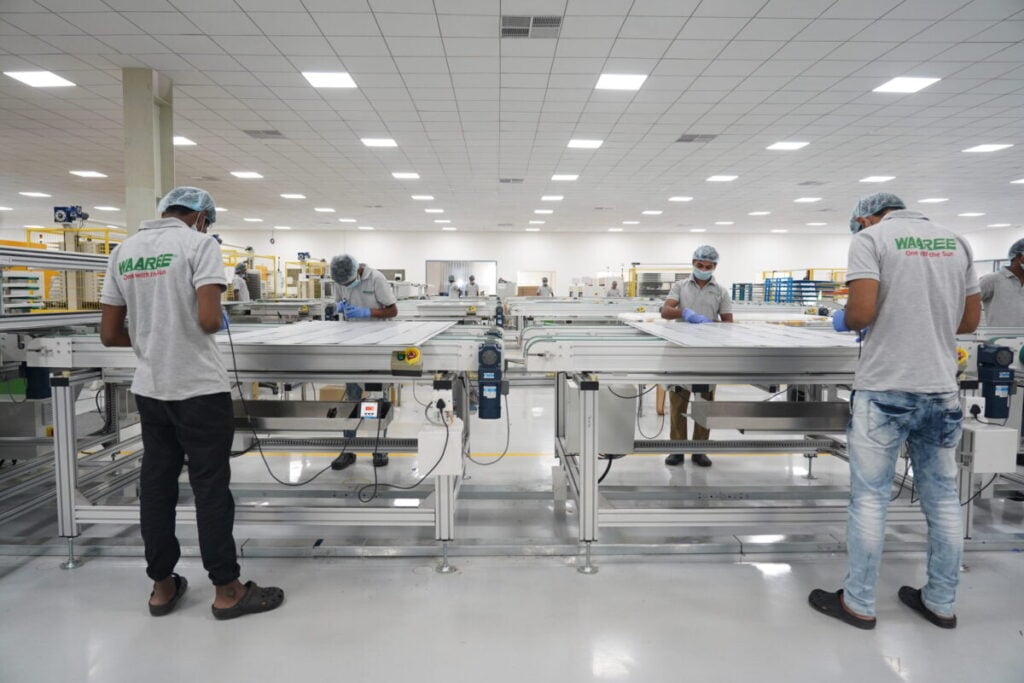
Waaree Energies Manufacturing & Facilities.


These show Waaree's advanced solar cell and module production lines in Gujarat, India—highlighting the assembly processes that use imported cells, which helped clarify the limited impact of US duties on assembled panels.Indian solar exports to the US have grown rapidly (e.g., $792.6 million in 2024, up over 9x from 2022), positioning India as an alternative to China amid global supply chain shifts. However, the steep duties threaten this momentum, raising costs for US buyers and potentially redirecting exports elsewhere.
Early Wednesday trade reflected panic:
Waaree Energies plunged as much as 14.6–15% to an intra-day low of Rs 2,580.50–2,571.45, hitting the lower circuit (10% limit) multiple times.
Premier Energies dropped up to 10% to Rs 666.90–699.4.
Other names like Vikram Solar (down ~5–7.5%), Waaree Renewable Technologies (~6%), and Borosil Renewables also saw pressure.
The broader Nifty and Sensex were mixed, but solar/renewable indices bore the brunt, with sentiment hit by fears of reduced US export competitiveness.
Waaree Energies' Clarification: Turning the Tide
Mid-morning, sentiment shifted after Waaree Energies Chairman and Managing Director Hitesh Doshi provided key insights in interviews (e.g., Zee Business and others). He clarified that the CVD applies only to solar cells manufactured in India, not to solar panels assembled in India using imported cells.
Premier Energies Production Lines
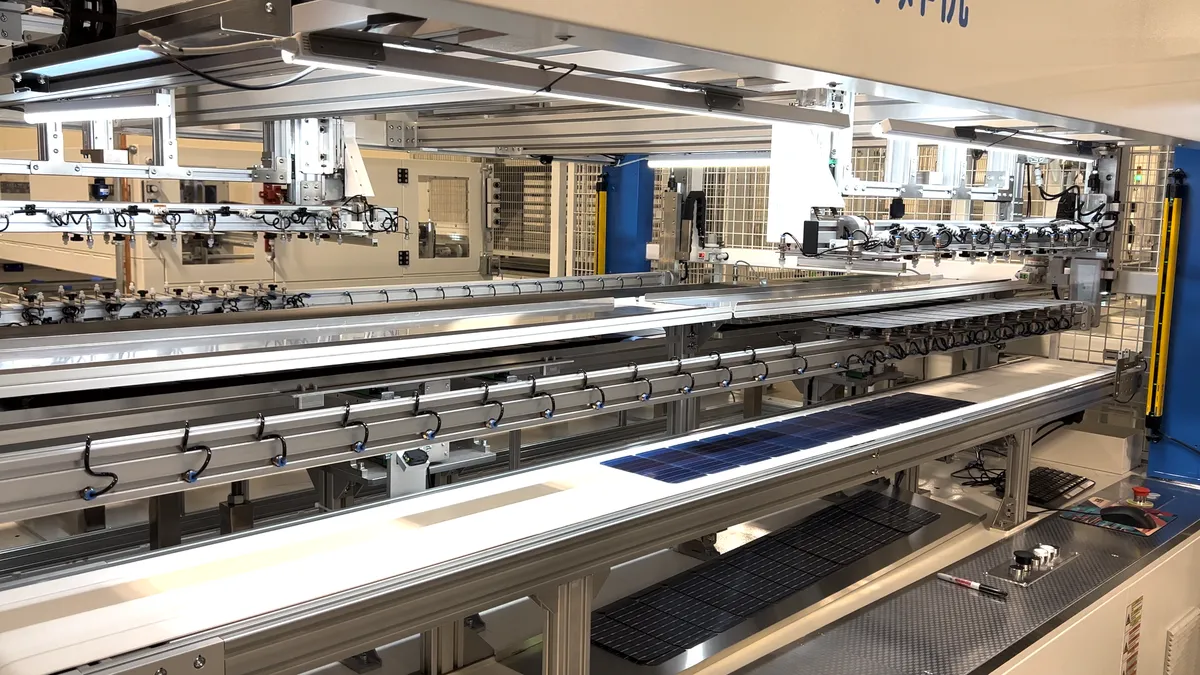
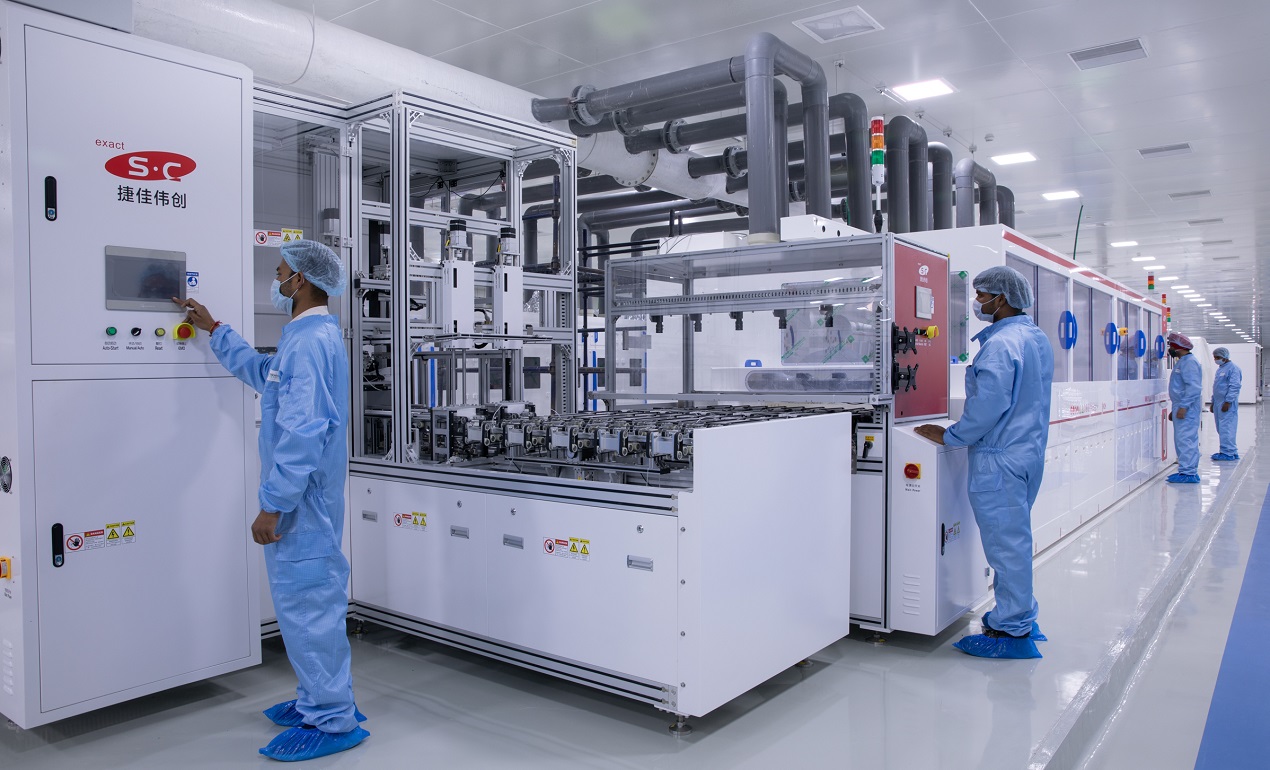 Premier Energies' modern cell and module facilities demonstrate the high-tech assembly operations that support resilience against external trade pressures.Most Indian manufacturers, including Waaree, import cells from low-duty countries (e.g., China, Vietnam) and assemble panels domestically for export. This "country of origin" rule for cells means assembled panels from imported cells face minimal or no impact from the duties. Doshi emphasized:
Waaree has not sold a single India-made solar cell in the US in the past 10 years.
The company's US sales involve panels assembled there or using non-India cells.
Only ~4% of US imports from India involve India-made cells in panels—limiting exposure.
Waaree also highlighted its growing US manufacturing footprint (1.6 GW in Texas, expanding to 3.2 GW), which insulates operations via local production (no import duties). This aligns with broader strategies to localize amid trade tensions.
As a result:
Waaree Energies pared losses significantly, trading down ~10.6% at Rs 2,701.9 around 10:30 am IST (from session lows; previous close ~Rs 3,023.50). High: Rs 2,821.10; Low: Rs 2,570.
Premier Energies trimmed to ~4.9–6.17% down at Rs 729.10–741.55 (from low Rs 666.90).
Broader solar stocks showed mixed recovery—some like Vikram Solar remained down ~5–6%, reflecting sector-wide caution.
Why Lingering Pressure Despite Clarification?
Even with Waaree's reassurance, stocks stayed 5-10% lower by late morning:
Uncertainty remains—the duties are preliminary; final rulings (including AD) could broaden scope.
Market & Trade Context


thedailybrief.zerodha.co/filters:format(webp)/solarbytes/media/media_files/2026/02/24/us-gks-2026-02-24-01-37-35.png)

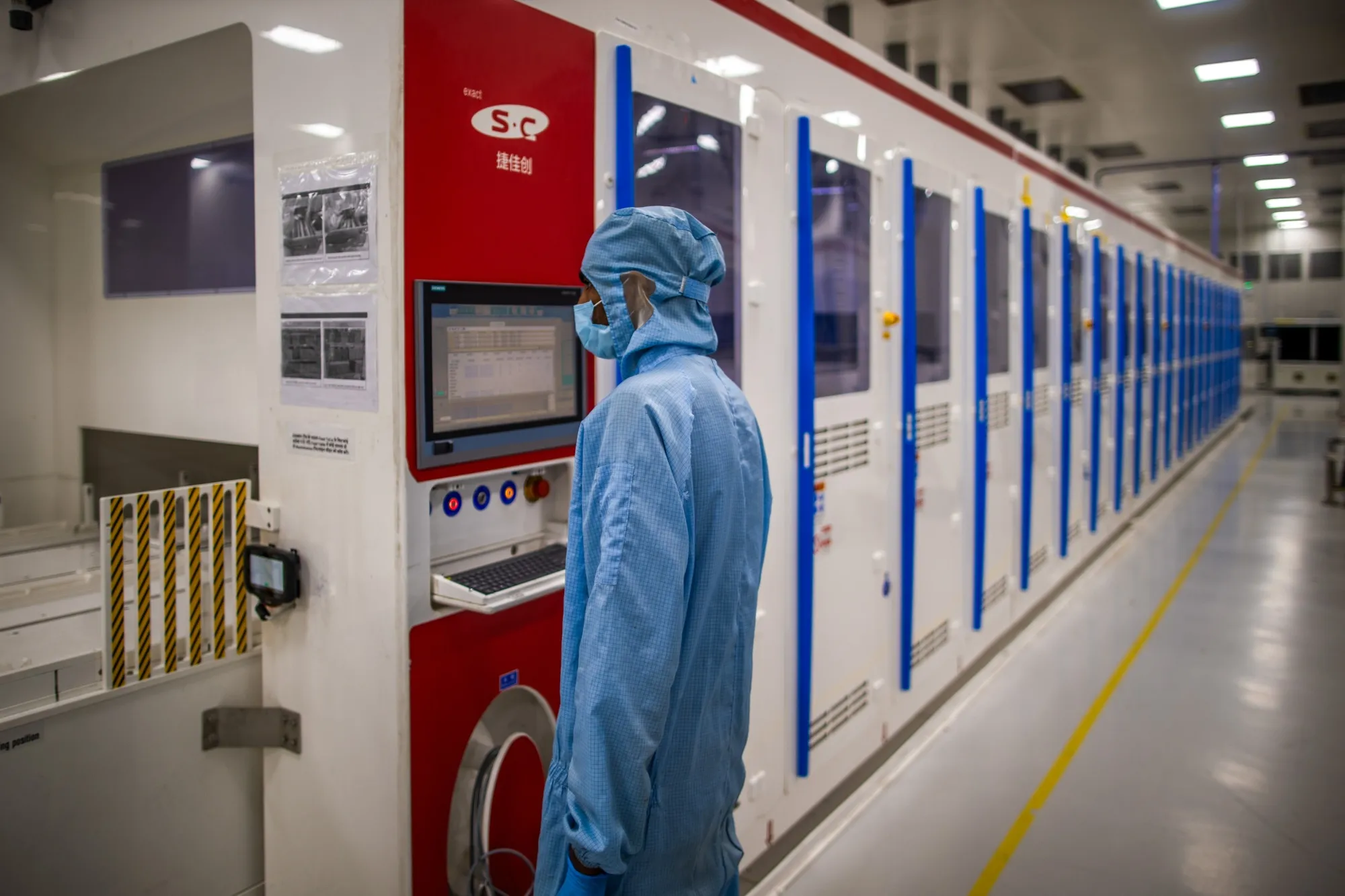
These include Indian market performance charts (reflecting broader volatility) and graphics/maps illustrating the US Commerce Department's preliminary countervailing duties targeting solar imports from India, Indonesia, and Laos—key to understanding the initial sell-off and subsequent trim in losses.
Rooftop Solar Installations (Waaree Focus)
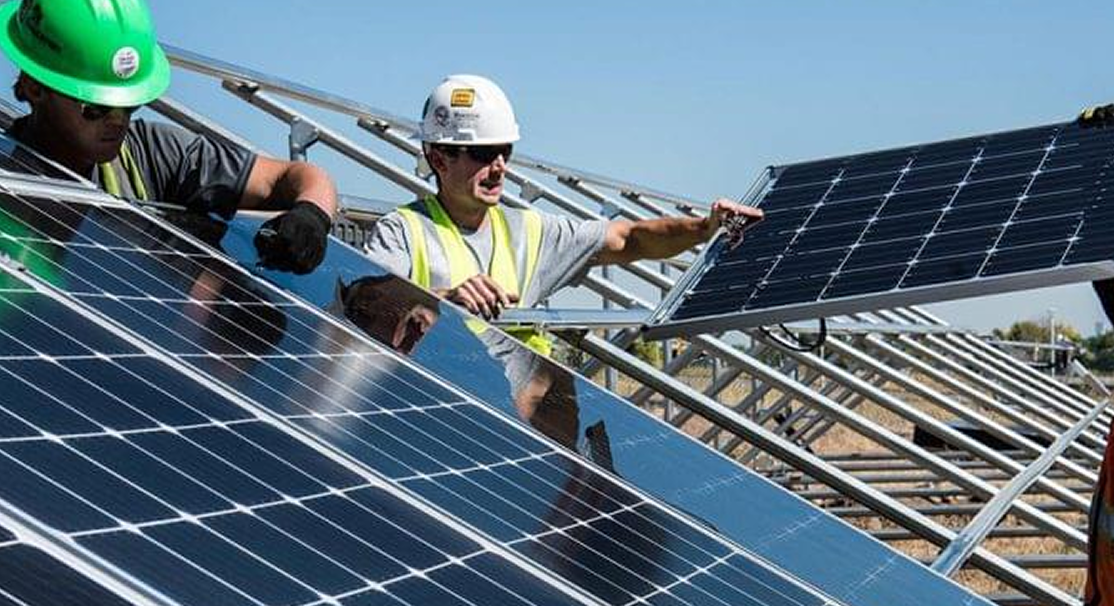


Rooftop solar arrays in action—emphasizing India's strong domestic demand that continues to support companies like Waaree and Premier despite export uncertainties.Export exposure varies: Waaree (~29% US reliance historically), Premier (low single-digit), Vikram (~16%)—any US slowdown hurts sentiment.
Global context: US protectionism under the current administration targets subsidized imports, part of efforts to revive domestic manufacturing.
Valuation concerns: Solar stocks had rallied on PLI schemes, domestic demand (India's 500 GW renewable target), and export hopes—now re-rating on trade risks.
Broader sector: Companies with heavy India-cell reliance could face more pain; supply chain shifts to US/local assembly accelerate.
Analysts note this could push more capacity to the US/Europe, benefiting firms with international footprints like Waaree.
Broader Implications for Indian Solar Sector
Positive: Clarification limits immediate damage; domestic focus (rooftop, utility-scale under PM Surya Ghar, etc.) remains strong. India's solar capacity additions continue robustly.
Challenges: US market (key growth driver) becomes costlier; potential redirection to Europe/Asia increases competition.
Opportunities: Accelerated US localization (Waaree's Texas expansion); diversification; stronger domestic subsidies via PLI 2.0.
For Waaree: Strong order book, US investments, and cell-import model provide buffer. Premier: Lower export reliance aids resilience.
Looking Ahead
The market awaits final Commerce rulings and any AD findings. Investors eye diversification, US capacity ramps, and domestic tenders. While today's pullback from lows shows resilience, volatility persists—solar remains high-beta amid global trade dynamics.




Comments
Post a Comment